
Discovery through Partnership | Excellence through Quality

| Product Name | Beta Synuclein Pre-formed Fibrils | |||||||||||||||||||||||||||||||||||||||||||||||||||||||||||||||||||||||||||||||||
| Description |
Human Recombinant Beta Synuclein PFFs (Type 1) |
|||||||||||||||||||||||||||||||||||||||||||||||||||||||||||||||||||||||||||||||||
| Applications | WB, SDS-PAGE, In vivo assay, In vitro assay | |||||||||||||||||||||||||||||||||||||||||||||||||||||||||||||||||||||||||||||||||
| Concentration | 2 mg/mL | |||||||||||||||||||||||||||||||||||||||||||||||||||||||||||||||||||||||||||||||||
| Conjugates |
No tag
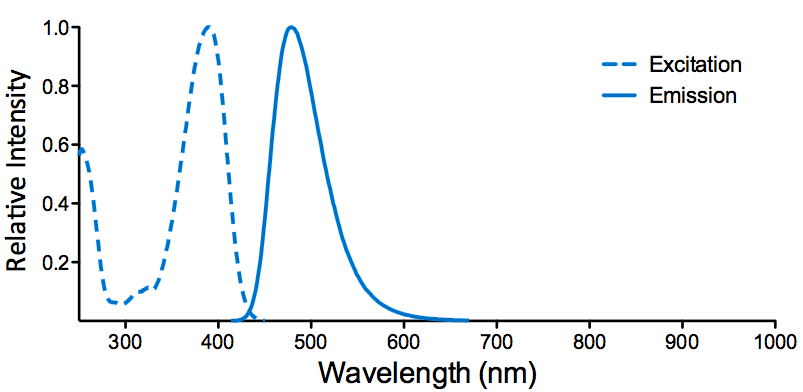
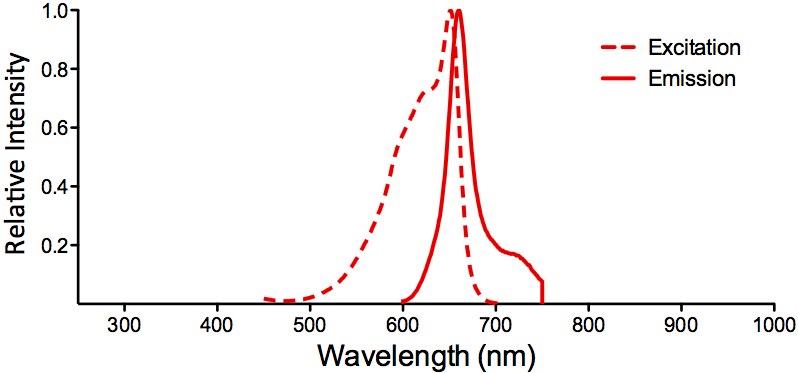
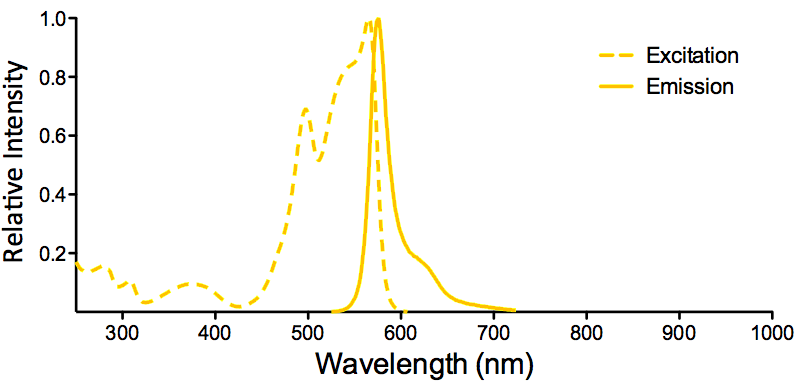
StreptavidinProperties:
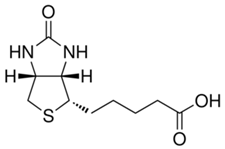
Biotin
|
|||||||||||||||||||||||||||||||||||||||||||||||||||||||||||||||||||||||||||||||||
| Nature | Recombinant | |||||||||||||||||||||||||||||||||||||||||||||||||||||||||||||||||||||||||||||||||
| Species | Human | |||||||||||||||||||||||||||||||||||||||||||||||||||||||||||||||||||||||||||||||||
| Expression System | E. coli | |||||||||||||||||||||||||||||||||||||||||||||||||||||||||||||||||||||||||||||||||
| Purity | >95% | |||||||||||||||||||||||||||||||||||||||||||||||||||||||||||||||||||||||||||||||||
| Other Resources | Sonication Protocol | |||||||||||||||||||||||||||||||||||||||||||||||||||||||||||||||||||||||||||||||||
| Protein Length | Full Length | |||||||||||||||||||||||||||||||||||||||||||||||||||||||||||||||||||||||||||||||||
| Protein Size | 14.28 kDa | |||||||||||||||||||||||||||||||||||||||||||||||||||||||||||||||||||||||||||||||||
| Field of Use | Not for use in humans. Not for use in diagnostics or therapeutics. For in vitro research use only. | |||||||||||||||||||||||||||||||||||||||||||||||||||||||||||||||||||||||||||||||||
Properties
| Storage Buffer | PBS pH 7.4 |
| Storage Temperature | -80ºC |
| Shipping Temperature | Dry Ice. Shipping note: Product will be shipped separately from other products purchased in the same order. |
| Purification | Ion-exchange Purified |
| Cite This Product | Human Recombinant Beta Synuclein Pre-formed Fibrils (StressMarq Biosciences | Victoria, BC CANADA | Catalog# SPR-457) |
| Certificate of Analysis | Certified >95% pure using SDS-PAGE analysis. |
| Other Relevant Information | For best results, sonicate immediately prior to use. Refer to the Neurodegenerative Protein Handling Instructions on our website, or the product datasheet for further information. Monomer source is catalog# SPR-405. |
Biological Description
| Alternative Names | Beta-synuclein, Synuclein beta, SNCB, SYUB_HUMAN, PNP14, Phosphoneuroprotein 14, 14 kDa brain-specific, G Protein Beta1/Gamma2 Subunit-Interacting Factor 1, Beta Synuclein PFFs |
| Research Areas | Alzheimer's Disease, Neurodegeneration, Neuroscience, Parkinson's Disease, Synuclein, Tangles & Tau |
| Cellular Localization | Cytoplasm |
| Accession Number | NP_001001502.1 |
| Gene ID | 6620 |
| Swiss Prot | Q16143 |
| Scientific Background |
Beta-synuclein, a member of the synuclein protein family, plays a nuanced role in neuronal function and pathology. Unlike its counterpart alpha-synuclein, which is heavily implicated in Parkinson’s disease and other synucleinopathies, beta-synuclein has traditionally been considered neuroprotective. However, emerging evidence suggests that beta-synuclein can form pre-formed fibrils (PFFs) under pathological conditions, contributing to neurodegenerative processes. Beta-synuclein PFFs exhibit distinct biophysical properties and aggregation dynamics that influence synaptic integrity and neuronal survival. These fibrils can disrupt synaptic vesicle trafficking, interfere with SNARE-complex assembly, and promote neuroinflammation—hallmarks of neurodegeneration. Recent studies indicate that beta-synuclein PFFs may act synergistically or antagonistically with alpha-synuclein aggregates, modulating disease progression in disorders such as dementia with Lewy bodies and multiple system atrophy. In vivo models demonstrate that beta-synuclein fibrillization correlates with age-dependent synaptic dysfunction and neuronal loss, underscoring its relevance in aging-related neurodegenerative diseases. The ability to generate and study beta-synuclein PFFs in controlled experimental systems provides a powerful tool for dissecting the molecular mechanisms of protein aggregation, toxicity, and intercellular propagation. As research advances, beta-synuclein PFFs are emerging as both biomarkers and therapeutic targets, offering new avenues for early diagnosis and intervention in neurodegenerative disorders. |
| References |
1. www.alz.org/alzheimers-dementia/facts-figures 2. Alzheimer, A. Über eine eigenartige Erkrankung der Hirnrinde. Allg. Z. Psychiatr. Psych.-Gerichtl. Med. 64, 146–148 (1907). 3. Taschenberger G., et al. (2013) Ann Neurol. 74(1): 109-118. |
Product Images
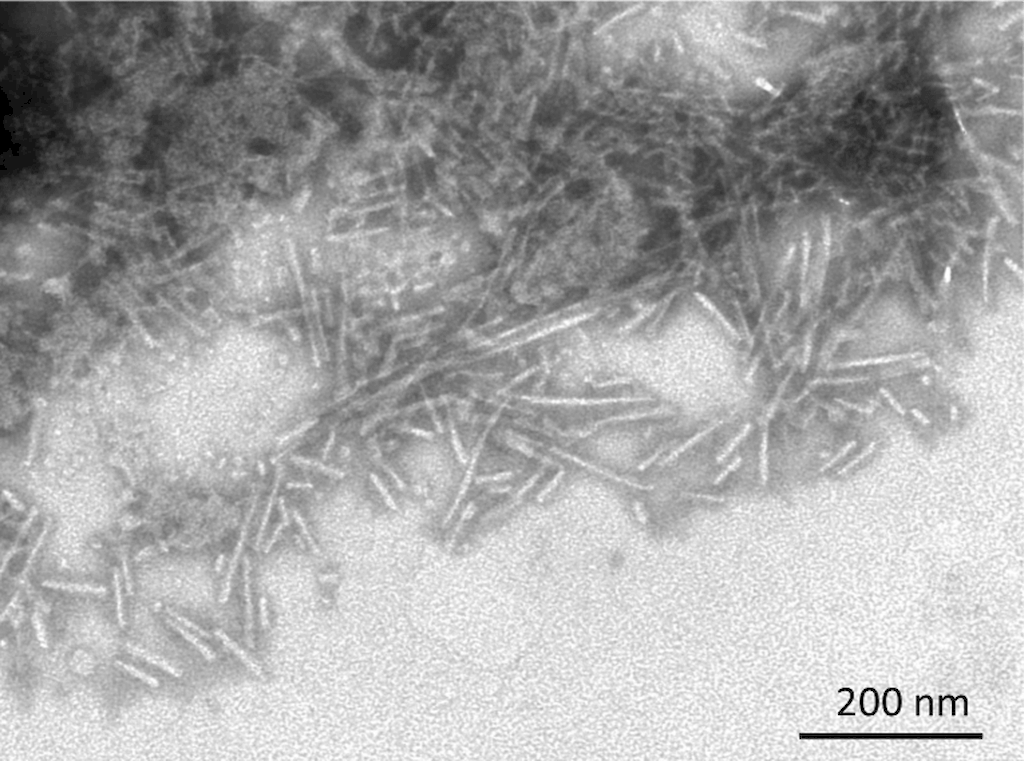
TEM of Active Human Recombinant Beta Synuclein Protein Pre-formed Fibrils (Type 1) (SPR-457)
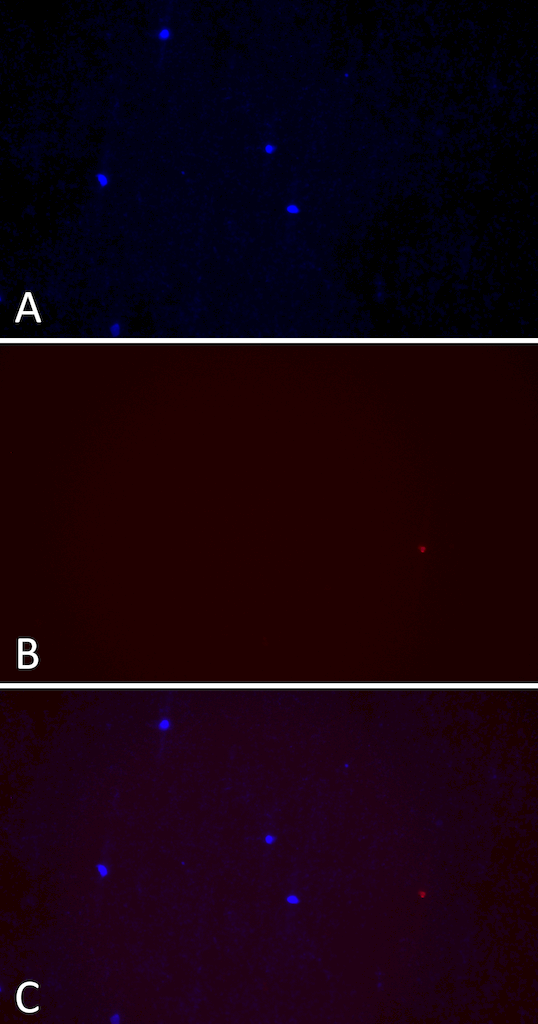
Primary rat hippocampal neurons treated with human beta synuclein Pre-formed fibrils (SPR-457) do not show Lewy body inclusion formation. Fibrils were sonicated 1 hour and added at 1 ug/mL concentration. A) Hoechst. B) pSer129. C) Merge.
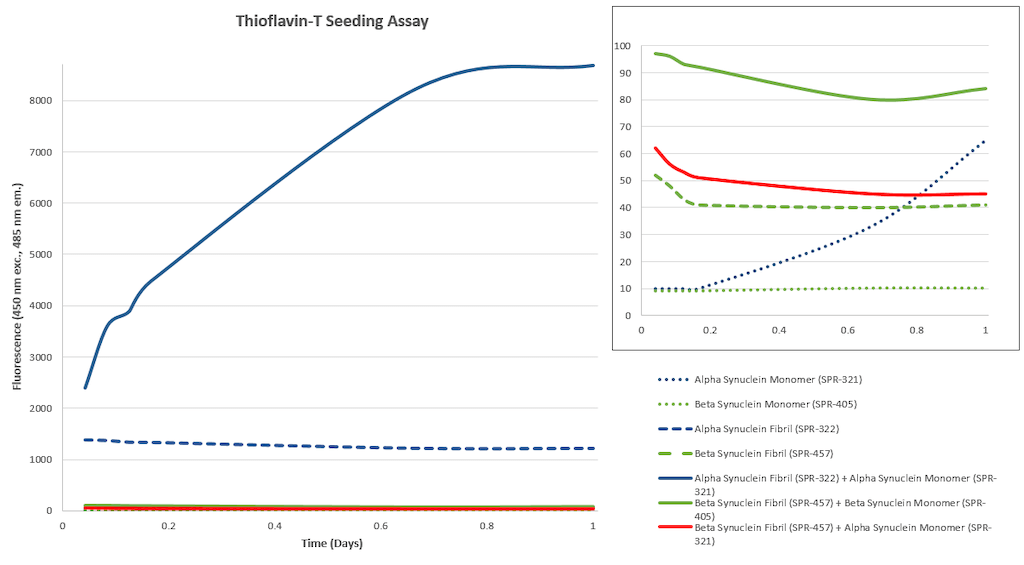
Thioflavin T is a fluorescent dye that binds to beta sheet-rich structures, such as those in alpha synuclein and beta synuclein fibrils. Beta synuclein lacks the NAC domain so its fibrils do not seed alpha synuclein or beta synuclein monomers.
 Powered by Bioz
Reviews
There are no reviews yet.