
Discovery through Partnership | Excellence through Quality

| Product Name | Gamma Synuclein Pre-formed Fibrils | |||||||||||||||||||||||||||||||||||||||||||||||||||||||||||||||||||||||||||||||||
| Description |
Human Recombinant Gamma Synuclein PFFs (Type 1) |
|||||||||||||||||||||||||||||||||||||||||||||||||||||||||||||||||||||||||||||||||
| Applications | WB, SDS-PAGE, In vivo assay, In vitro assay | |||||||||||||||||||||||||||||||||||||||||||||||||||||||||||||||||||||||||||||||||
| Concentration | 2 mg/mL | |||||||||||||||||||||||||||||||||||||||||||||||||||||||||||||||||||||||||||||||||
| Conjugates |
No tag
StreptavidinProperties:
Biotin
|
|||||||||||||||||||||||||||||||||||||||||||||||||||||||||||||||||||||||||||||||||
| Nature | Recombinant | |||||||||||||||||||||||||||||||||||||||||||||||||||||||||||||||||||||||||||||||||
| Species | Human | |||||||||||||||||||||||||||||||||||||||||||||||||||||||||||||||||||||||||||||||||
| Expression System | E. coli | |||||||||||||||||||||||||||||||||||||||||||||||||||||||||||||||||||||||||||||||||
| Purity | >95% | |||||||||||||||||||||||||||||||||||||||||||||||||||||||||||||||||||||||||||||||||
| Other Resources | Sonication Protocol | |||||||||||||||||||||||||||||||||||||||||||||||||||||||||||||||||||||||||||||||||
| Protein Length | Full Length | |||||||||||||||||||||||||||||||||||||||||||||||||||||||||||||||||||||||||||||||||
| Protein Size | 13.33 kDa | |||||||||||||||||||||||||||||||||||||||||||||||||||||||||||||||||||||||||||||||||
| Field of Use | Not for use in humans. Not for use in diagnostics or therapeutics. For in vitro research use only. | |||||||||||||||||||||||||||||||||||||||||||||||||||||||||||||||||||||||||||||||||
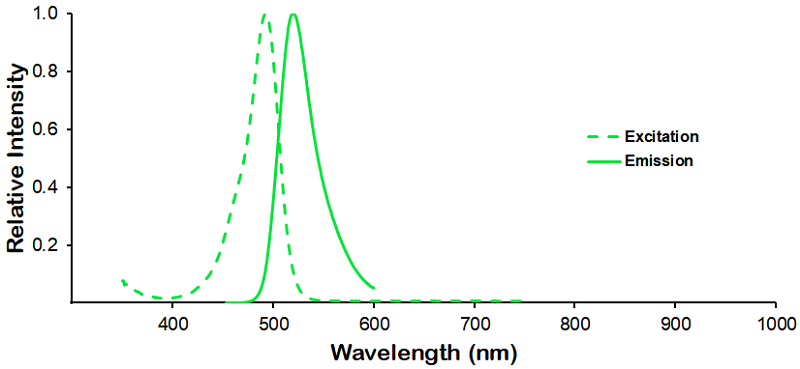
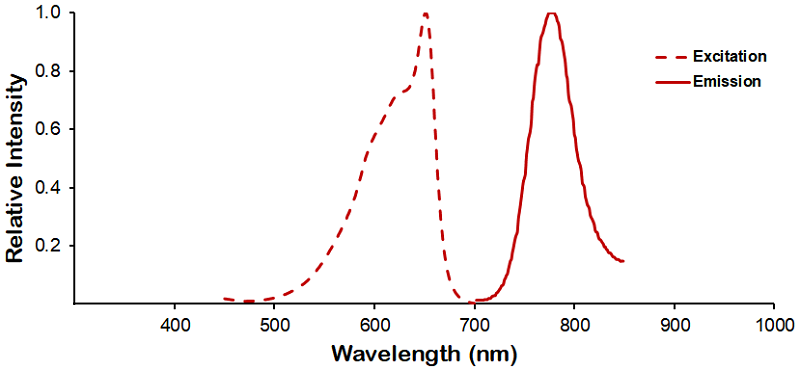
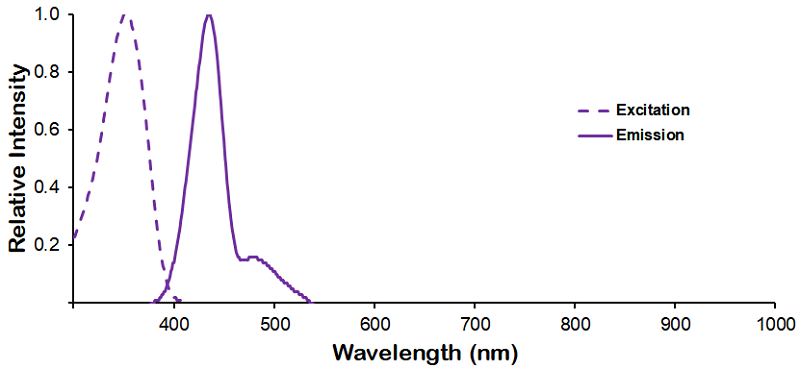
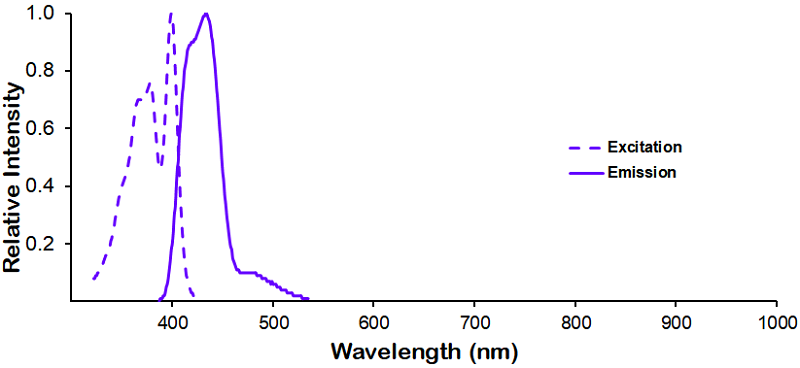
Properties
| Storage Buffer | PBS pH 7.4 |
| Storage Temperature | -80ºC |
| Shipping Temperature | Dry Ice. Shipping note: Product will be shipped separately from other products purchased in the same order. |
| Purification | Ion-exchange Purified |
| Cite This Product | Human Recombinant Gamma Synuclein Pre-formed Fibrils (StressMarq Biosciences | Victoria, BC CANADA | Catalog# SPR-459) |
| Certificate of Analysis | Certified >95% pure using SDS-PAGE analysis. Low endotoxin <5 EU/mL @ 2mg/mL. |
| Other Relevant Information | For best results, sonicate immediately prior to use. Refer to the Neurodegenerative Protein Handling Instructions on our website, or the product datasheet for further information. Monomer source is catalog# SPR-407. |
Biological Description
| Alternative Names | Gamma-synuclein, Synuclein gamma, SNCG, SYUG_HUMAN, BCSG1, Breast cancer-specific gene 1, Persyn, PRSN, SR, Synoretin, Phosphoneuroprotein 14, PNP14, 14 kDa brain-specific, Gamma Synuclein PFFs |
| Research Areas | Alzheimer's Disease, Neurodegeneration, Neuroscience, Parkinson's Disease, Synuclein, Tangles & Tau |
| Cellular Localization | Centrosome, Cytoskeleton, Perinuclear Region, Spindle |
| Accession Number | NP_003078.2 |
| Gene ID | 6623 |
| Swiss Prot | O76070 |
| Scientific Background |
Gamma-synuclein, a lesser-studied member of the synuclein family, is increasingly recognized for its potential role in neurodegenerative disorders. While traditionally associated with maintaining neurofilament integrity and modulating axonal architecture, recent findings suggest that gamma-synuclein can misfold and aggregate into pre-formed fibrils (PFFs), contributing to pathogenic mechanisms in the central nervous system. Gamma-synuclein PFFs exhibit unique aggregation kinetics and structural properties that may disrupt neuronal homeostasis. These fibrils can interfere with synaptic transmission, promote oxidative stress, and activate neuroinflammatory pathways—key features observed in diseases such as Alzheimer’s, Parkinson’s, and amyotrophic lateral sclerosis. Unlike alpha-synuclein, gamma-synuclein aggregates may preferentially localize to specific neuronal subtypes, influencing disease heterogeneity and progression. Experimental models demonstrate that gamma-synuclein PFFs can propagate between cells, seeding further aggregation and amplifying neurotoxicity. Their interaction with cytoskeletal components and signaling pathways, including MAPK and Elk-1, underscores their potential to alter neuronal survival and plasticity. The study of gamma-synuclein PFFs offers a promising frontier for biomarker discovery and therapeutic intervention. By elucidating their role in proteinopathy and neurodegeneration, researchers can better understand disease mechanisms and develop targeted strategies to mitigate synuclein-driven pathology. |
| References | 1. Nishioka K., et al. (2010) Arch Neurol. 67(8): 970-975. 2. Surgucheva I., Newell K.L., Burns J., Surguchov A. (2014) Acta Neuropathol Commun. 2: 132. 3. Bruening. W., et al. (2000) Cancer. 88(9): 2154-2163. 4. Mukaetova-Ladinska E.B., et al. (2008) Dement Geriatr Cogn Disord. 26(1): 32-42. |
Product Images
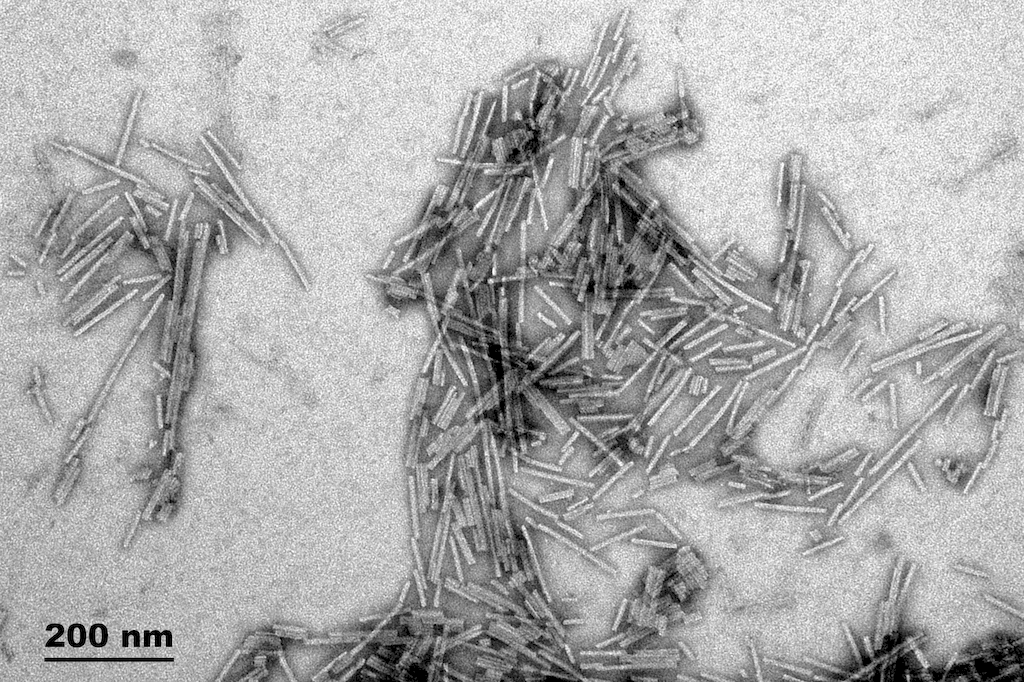
TEM of Human Recombinant Gamma Synuclein Protein Pre-formed Fibrils (SPR-459)
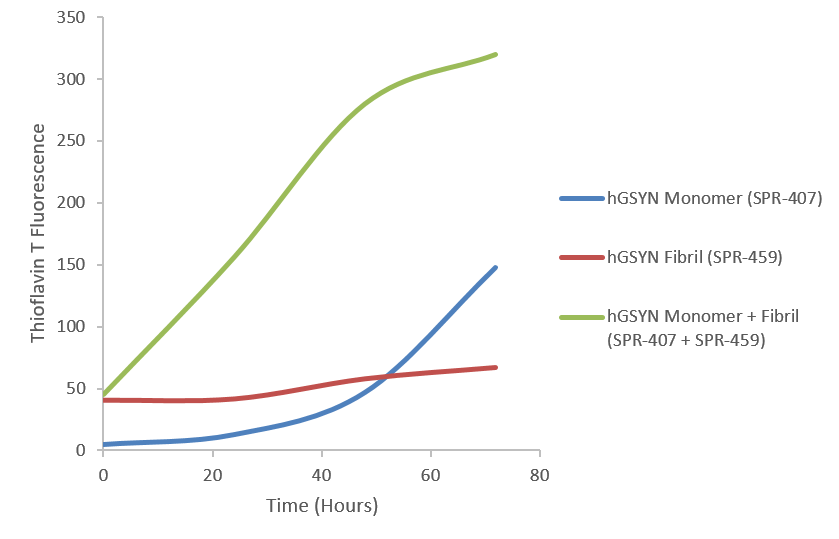
Thioflavin T is a fluorescent dye that binds to beta sheet-rich structures, such as those in gamma synuclein fibrils. Increased fluorescence (correlated to gamma synuclein fibrillization) is seen when human gamma synuclein monomer (SPR-407) is combined with human gamma synuclein PFFs (SPR-459).
 Powered by Bioz
Reviews
There are no reviews yet.