
Discovery through Partnership | Excellence through Quality

| Product Name | Tau-383 (0N4R) Wild-Type Pre-formed Fibrils | |||||||||||||||||||||||||||||||||||||||||||||||||||||||||||||||||||||||||||||||||
| Description |
Human Recombinant Tau-383 (0N4R) Wild-Type PFFs |
|||||||||||||||||||||||||||||||||||||||||||||||||||||||||||||||||||||||||||||||||
| Applications | WB, SDS PAGE, In vitro Assay | |||||||||||||||||||||||||||||||||||||||||||||||||||||||||||||||||||||||||||||||||
| Concentration | 2 mg/mL | |||||||||||||||||||||||||||||||||||||||||||||||||||||||||||||||||||||||||||||||||
| Conjugates |
No tag
StreptavidinProperties:
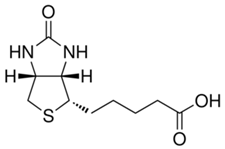
Biotin
|
|||||||||||||||||||||||||||||||||||||||||||||||||||||||||||||||||||||||||||||||||
| Nature | Recombinant | |||||||||||||||||||||||||||||||||||||||||||||||||||||||||||||||||||||||||||||||||
| Species | Human | |||||||||||||||||||||||||||||||||||||||||||||||||||||||||||||||||||||||||||||||||
| Expression System | E. coli | |||||||||||||||||||||||||||||||||||||||||||||||||||||||||||||||||||||||||||||||||
| Amino Acid Sequence | MAEPRQEFEVMEDHAGTYGLGDRKDQGGYTMHQDQEGDTDAGLKAEEAGIGDTPSLEDEAAGHVTQARMVSKSKDGTGSDDKKAKGADGKTKIATPRGAAPPGQKGQANATRIPAKTPPAPKTPPSSGEPPKSGDRSGYSSPGSPGTPGSRSRTPSLPTPPTREPKKVAVVRTPPKSPSSAKSRLQTAPVPMPDLKNVKSKIGSTENLKHQPGGGKVQIINKKLDLSNVQSKCGSKDNIKHVPGGGSVQIVYKPVDLSKVTSKCGSLGNIHHKPGGGQVEVKSEKLDFKDRVQSKIGSLDNITHVPGGGNKKIETHKLTFRENAKAKTDHGAEIVYKSPVVSGDTSPRHLSNVSSTGSIDMVDSPQLATLADEVSASLAKQGL | |||||||||||||||||||||||||||||||||||||||||||||||||||||||||||||||||||||||||||||||||
| Purity | >95% as per SDS-PAGE, >80% as per A260/A280 | |||||||||||||||||||||||||||||||||||||||||||||||||||||||||||||||||||||||||||||||||
| Other Resources | Sonication Protocol | |||||||||||||||||||||||||||||||||||||||||||||||||||||||||||||||||||||||||||||||||
| Protein Length | 383 aa | |||||||||||||||||||||||||||||||||||||||||||||||||||||||||||||||||||||||||||||||||
| Protein Size | 40.007 kDa | |||||||||||||||||||||||||||||||||||||||||||||||||||||||||||||||||||||||||||||||||
| Field of Use | Not for use in humans. Not for use in diagnostics or therapeutics. For in vitro research use only. | |||||||||||||||||||||||||||||||||||||||||||||||||||||||||||||||||||||||||||||||||
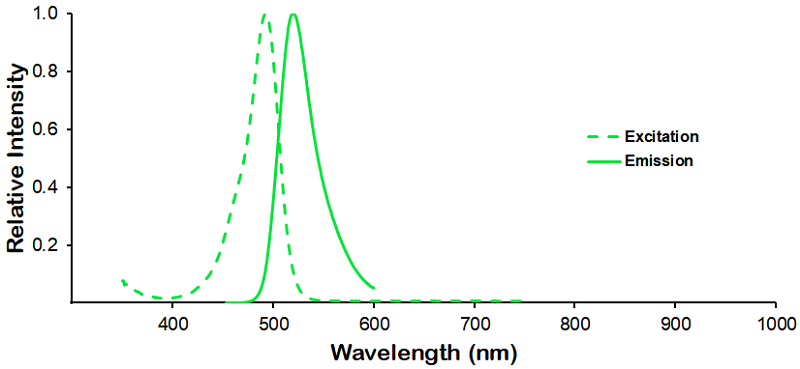
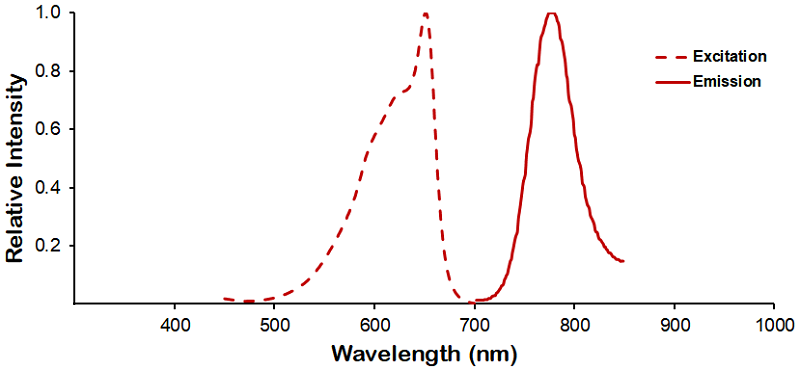
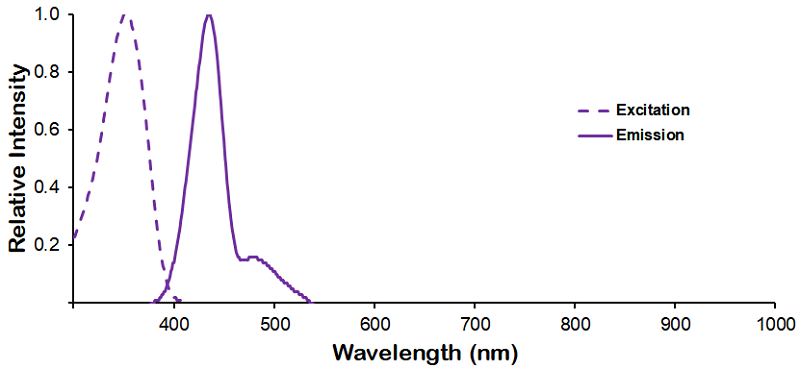
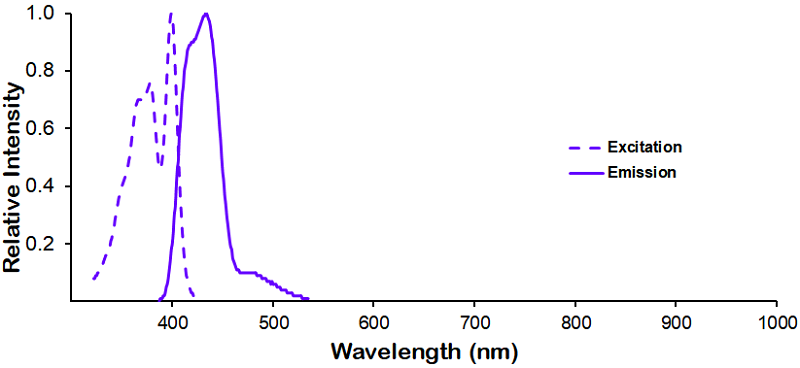
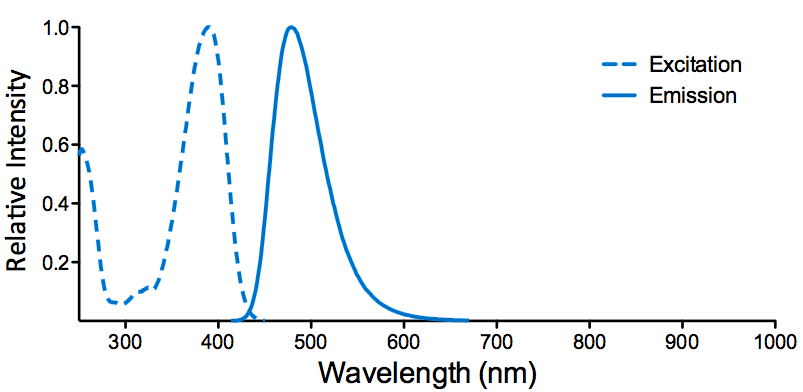
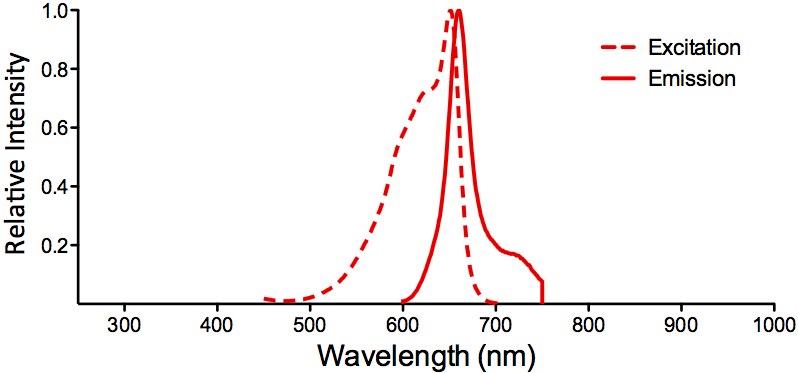
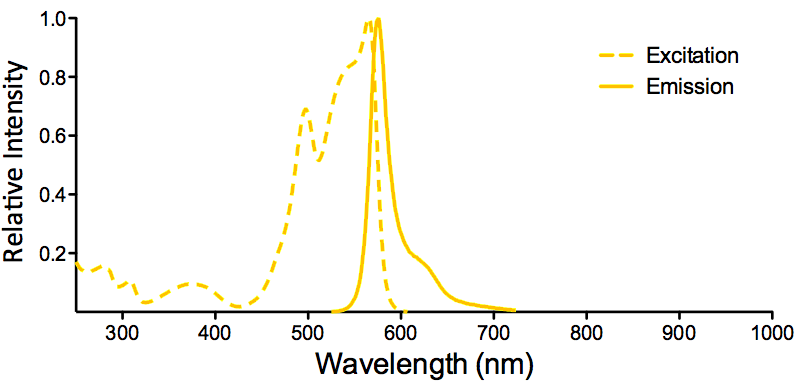
Properties
| Storage Buffer | 10mM Hepes pH 7.4, 100mM NaCl |
| Storage Temperature | -80ºC |
| Shipping Temperature | Dry Ice. Shipping note: Product will be shipped separately from other products purchased in the same order. |
| Purification | Ion-exchange Purified |
| Cite This Product | Human Recombinant Tau-383 (0N4R) Wild-Type Pre-formed Fibrils (StressMarq Biosciences | Victoria, BC CANADA | Catalog# SPR-510) |
| Certificate of Analysis | Protein certified >95% pure on SDS-PAGE & > 80% on Nanodrop analysis. Low endotoxin <5 EU/mL @ 2mg/mL. |
| Other Relevant Information | Monomer source is catalog# SPR-509. |
Biological Description
| Alternative Names | Tau-383, Tau-D, Microtubule-associated tau, MAPT, TAU, MTBT1, MTBT2, MAPTL, PPND, PPP1R103, FTDP-17, Tau-40, PHF-Tau, Paired Helical Filament-Tau, Neurofibrillary Tangle, Isoform 4, G Protein Beta1/Gamma2 Subunit-Interacting Factor 1, Tau PFFs |
| Research Areas | Alzheimer's Disease, Neurodegeneration, Neuroscience, Tangles & Tau |
| Swiss Prot | P10636-6 |
| Scientific Background |
Tau-383, also known as the 0N4R isoform of the microtubule-associated protein tau (MAPT), is a naturally occurring variant composed of 383 amino acids. It lacks N-terminal inserts but contains four microtubule-binding repeat domains, making it highly prone to aggregation. This isoform is prominently expressed in the adult human brain and plays a vital role in stabilizing microtubules and maintaining neuronal structure. Under pathological conditions, Tau-383 can misfold and assemble into β-sheet-rich fibrillar aggregates. Pre-formed fibrils (PFFs) derived from wild-type Tau-383 replicate key structural and biochemical features of tau aggregates found in tauopathies such as Alzheimer’s disease, progressive supranuclear palsy, and corticobasal degeneration. Tau-383 PFFs are powerful tools for modeling tau pathology in vitro and in vivo. They efficiently seed endogenous tau aggregation, induce neurofibrillary tangle formation, and trigger neurodegenerative cascades including synaptic dysfunction and neuronal death. Their reproducibility and disease relevance make them ideal for mechanistic studies and therapeutic screening. By mimicking the core pathological features of tau-driven neurodegeneration, Tau-383 wild-type PFFs accelerate research into disease progression and intervention strategies. They support the development of targeted therapies aimed at inhibiting tau aggregation, enhancing clearance, and restoring neuronal function in tauopathies. |
| References |
1. Goedert et al. 1989. Multiple isoforms of human microtubule-associated protein tau: sequences and localization in neurofibrillary tangles of Alzheimer’s disease. Neuron. DOI: 10.1016/0896-6273(89)90210-9 2. Goedert, Eisenberg and Crowther. 2017. Propagation of Tau Aggregates and Neurodegeneration. Annual Review of Neuroscience. DOI: 10.1146/annurev-neuro-072116-031153 3. Dregni et al. 2022. Fluent molecular mixing of Tau isoforms in Alzheimer’s disease neurofibrillary tangles. Nature communications. DOI: 10.1038/s41467-022-30585-0 |
Product Images
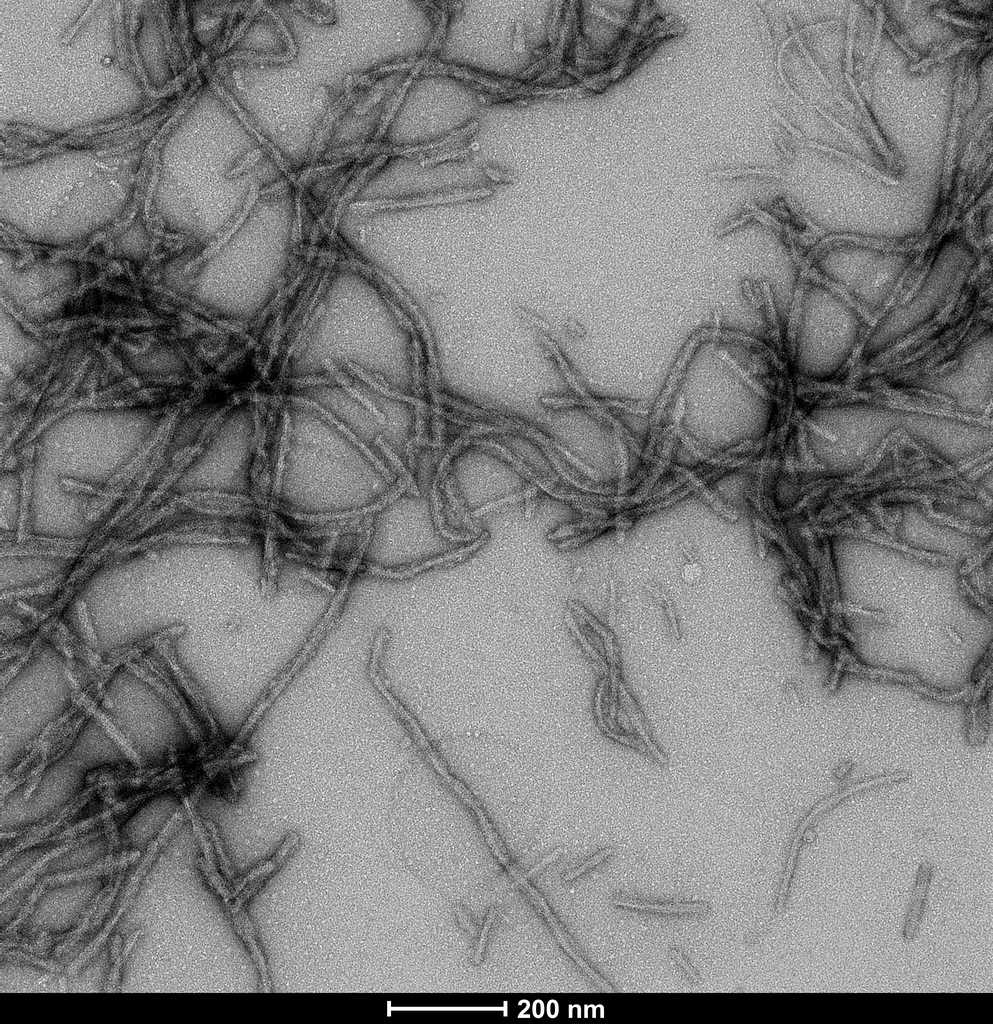
Representative TEM image of E. coli-expressed Tau 0N4R Pre-Formed Fibrils (PFFs), 200nm scale. Negative stain transmission electron microscopy images of SPR-510 acquired at 80 Kv on carbon coated 400 mesh copper grids using phosphotungstic acid and uranyl acetate stain.
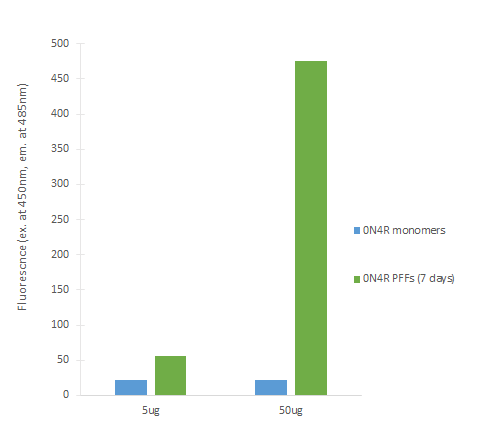
ThT-positive signal of human Tau-383 (0N4R) Pre-formed Fibrils (SPR-510) compared to monomers (SPR-509). Samples incubated with 25 uM ThT and read with an XPS Microplate Reader at 450nmex/485nmem.
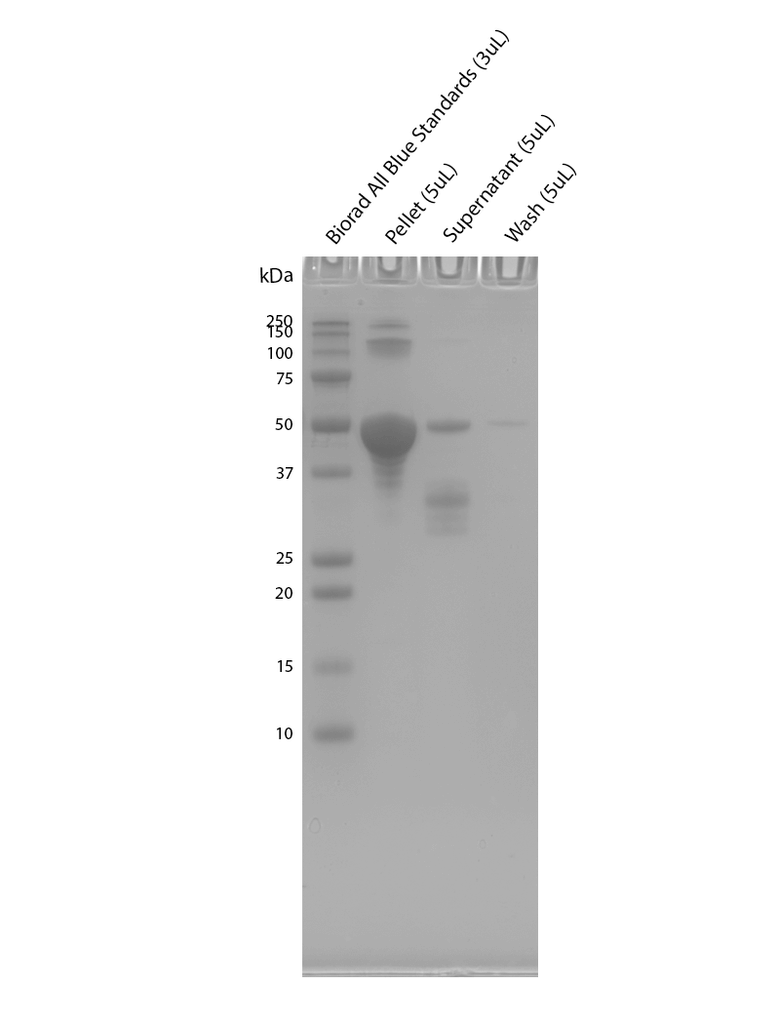
Sedimentation assay on E. coli expressed hTau-383 (0N4R) PFFs. Samples were spun down at 15,000 x g, washed, and then spun down again. Fibril samples are prepared in denaturing conditions prior to running on the gel. SDS-PAGE analysis on a 12% Bis-Tris gel shows that the majority of the fibril is insoluble.
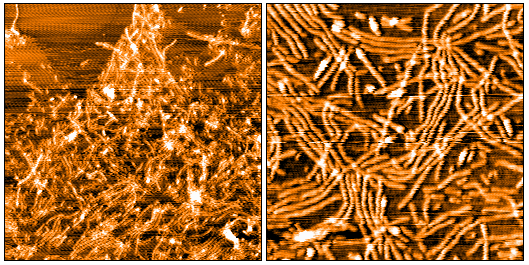
Atomic force microscopy analysis of 1 mg/mL fibrils diluted to 0.01 mg/mL with dH2O mounted on freshly cleaved mica, washed, dried and analyzed with tapping mode. Representative images are 5 x 5 µm x-y (left) and 2 x 2 µm x-y (right), both with a Z-range set at 9nm.
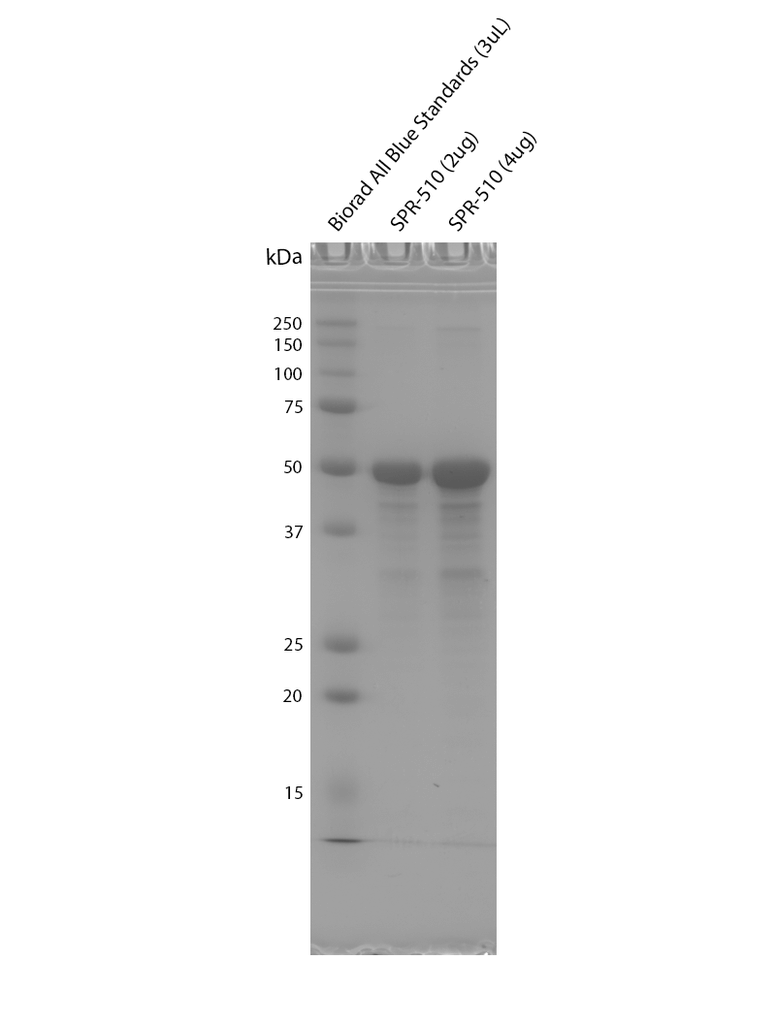
SDS-PAGE analysis of purified E. coli expressed hTau-383 (0N4R) PFFs on a 12% Tris-Glycine gel. Note: fibril samples are prepared in denaturing conditions prior to running on the gel, and are not SDS-stable.
 Powered by Bioz
Reviews
There are no reviews yet.