
Exploring the Origins of Neurodegenerative Diseases
Neurodegenerative diseases (NDDs) are characterized by the degeneration of neurons in the brain, which causes severe mental and physical effects. Alzheimer’s disease (AD) and Parkinson’s disease (PD) are the two most prevalent neurodegenerative diseases worldwide, and are classified as proteinopathies, meaning they are diseases defined by the misfolding and aggregation of specific proteins within brain tissue.
Though over 57 million people currently have NDDs globally, there is no known cure, and the majority of these cases do not have a known cause. There has been a concerted effort from researchers around the world to identify causes of NDDs, and though it is exceedingly difficult to elucidate direct causes, a few key risk factors for these diseases have emerged.
Causative factor research
Before examining the current research, it is important to define the causes and risk factors when discussing NDDs. Direct causality cannot be easily determined in NDD research, and often the cause of neurodegeneration is not due to one factor alone, but a myriad of risk factors and mutations that act in tandem.
Risk factors are therefore a more accurate term to describe the things that are correlated with developing NDDs, as they do not confer a linear or direct relationship with the disease. While the most prevalent risk factor for NDDs is aging, additional risk factors can be divided into two main categories: genetic and environmental factors.
Genetic factors
One of the key genetic factors in the susceptibility of Alzheimer’s disease is mutations in the Amyloid Precursor Protein (APP). Under normal conditions, APP is a transmembrane protein that is cleaved to form variants of amyloid beta. The misfolding and aggregation of amyloid beta is a pathological symptom of AD and as such, mutations in this gene can generate autosomal dominant alleles, which are associated with early-onset Alzheimer’s.
Another set of genes with implications for Alzheimer’s risk are PSEN1 and PSEN2, which encode the proteins Prenisilin1 and Prenisilin2. Both proteins cleave APP to form amyloid beta, and therefore nucleotide changes in these genes can result in increased production of toxic amyloid beta species. Mutations in PSEN1/PSEN2 are linked to approximately 70% of early-onset AD cases.
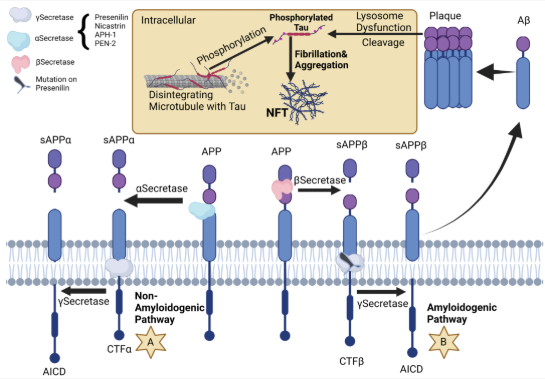
Figure 1. Graphical representation of amyloid precursor protein (APP) pathways from Ciurea et al., 2023.
Genetic factors account for approximately 25% of the risk for developing Parkinson’s disease, and the disease itself can be separated into subgroups based on genetic classifications. One subgroup is familial PD which, similar to early-onset AD, is characterized by high-penetrance genetic variants. One of the most notable mutations in familial PD is in the LRRK2 gene, which contributes to a pro-inflammatory cytokine profile in PD patients.
However, only 10-15% of patients with PD have the familial variant, and the remaining 85-90% have what is known as sporadic PD. Sporadic PD is caused by a combination of aging, environmental factors, and genetic mutations, though the exact risk factors for each patient are often not identifiable. Therefore, it is crucial to research these factors in tandem to gain a clear picture of the development of NDDs.
Environmental factors
Environmental risk factors include factors such as environmental exposures (pollutants, lifestyle), as well as drug use, previous infections, and diet. These are typically more difficult to identify and define than genetic factors, although there are certain environmental risk factors which have garnered attention due to their prevalence:
- Neurotoxicants: Neurotoxicants are chemicals that impair the function of the nervous system, and the severity of their impacts are highly correlated with the dose. Some key categories of neurotoxicants that have been researched for their impact on NDD development include heavy metals and pesticides. Aluminum has been researched extensively as a potential causative agent for Alzheimer’s disease, as the metal has been found in amyloid beta plaques and tangles, though a conclusion has not yet been reached.
- Gut-brain axis (GBA): The GBA is the biochemical link between the gastrointestinal tract and central nervous system, and recent research has found that NDDs are commonly associated with an inflammatory gut microbiome. A consensus has not been reached about whether the relationship between gut health and neurodegeneration is causative, though it is currently being examined for therapeutic uses.
- Alcohol: It has been well established that alcohol use disorders are associated with neurodegeneration. The process of metabolizing alcohol creates reactive oxygen species, which damages mitochondria and DNA. This prompts an inflammatory response in astrocytes and microglia, which can cause these cells to release inflammatory factors in the brain that damage neurons. Additionally, chronic exposure to alcohol has been shown to exacerbate amyloidosis, as it delays the clearance of neurotoxic protein species such as those found in AD and PD.
Summary
As the number of people affected by neurodegenerative diseases continues to grow, the need for thorough research into the risk factors and progression of these diseases is crucial. Seeing as neurodegenerative diseases have no known cures, and limited therapeutic interventions available, further research into the progression of NDDs may provide key insights into patient care and treatments. While none of these risk factors independently lead to the development of NDDs, having a better understanding of the mechanisms and underlying causes of NDDs may aid with earlier diagnoses and therapeutic interventions.
Related StressMarq products
Trusted by scientists worldwide for exceptional quality and consistency, StressMarq offers a comprehensive range of products for neurodegenerative disease research. Complement your studies with rigorously validated monomers, oligomers and pre-formed fibrils for tau, alpha synuclein, and amyloid beta proteins for disease modelling. Visit StressMarq.com to learn more, and to explore the latest scientific publications using our specialized proteins preparations.
References
- Alcohol as a Modifiable Risk Factor for Alzheimer’s Disease—Evidence from Experimental Studies. Chandrashekar et al., J. Mol. Sci. 2023
- An Updated and Comprehensive Review Exploring the Gut–Brain Axis in Neurodegenerative Disorders and Neurotraumas: Implications for Therapeutic Strategies. Hasan et al., Brain Sci. 2025
- Hallmarks of neurodegenerative diseases. Wilson et al., RCS. 2023
- Impact of Alcohol Abuse on Susceptibility to Rare Neurodegenerative Diseases. Araujo et al., Mol. Biosci. 2021
- Microbiota-gut-brain axis and its therapeutic applications in neurodegenerative diseases. Sheng Loh et al., Sig Transduct Target Ther. 2024
- Peripheral inflammatory immune response differs among sporadic and familial Parkinson’s disease. Muñoz-Delgado et al., npj Parkinsons Dis.
- Shedding light on the etiology of neurodegenerative diseases and dementia: the exposome paradigm. Cavaliere & Gülöksüz, npj Mental Health Res. 2022
- The Global Neurodegeneration Proteomics Consortium: biomarker and drug target discovery for common neurodegenerative diseases and aging. Imam et al., Nat Med. 2025
- The Role of Environmental Exposures in Neurodegeneration and Neurodegenerative Diseases. Cannon & Greenamyre, Toxicol Sci. 2011
- Unraveling Molecular and Genetic Insights into Neurodegenerative Diseases: Advances in Understanding Alzheimer’s, Parkinson’s, and Huntington’s Diseases and Amyotrophic Lateral Sclerosis. Ciurea et al., J. Mol. Sci. 2023
Leave a Reply