Alpha Synuclein E83Q Mutant Pre-formed Fibrils

Human Recombinant Alpha Synuclein E83Q Mutant PFFs

Catalog No. SPR-539

0 out of 5 based on 0 customer ratings
Expression System E. coli
Tags No tag
SKU: SPR-539 Category:

SPR-539_Alpha-Synuclein-E83Q-Mutant-Pre-formed-Fibrils-Protein-AFM-1.png
Sedimentation assay of Alpha Synuclein E83Q Mutant Pre-formed Fibrils (SPR-539)Thioflavin T assay of Alpha Synuclein E83Q Mutant Pre-formed Fibrils (SPR-539)SDS-Page of Alpha Synuclein E83Q Mutant Pre-formed Fibrils (SPR-539)
Product Name Alpha Synuclein E83Q Mutant Pre-formed Fibrils
Description

Human Recombinant Alpha Synuclein E83Q Mutant PFFs

Applications In vitro Assay, In vivo Assay
Concentration 2 mg/mL
Conjugates No tag
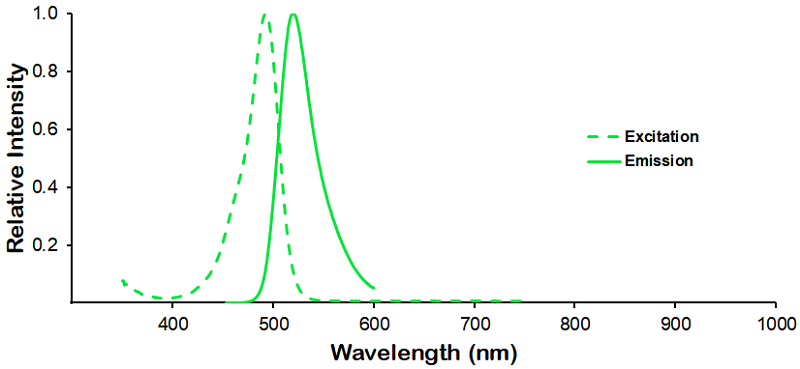
Dylight 488
Overview:

  • High fluorescence yield
  • High photostability
  • Less pH-sensitive
  • Excellent batch-to-batch reproducibility
  • Stringently QC tested
  • Molecular weight: 1011 g/mol

Dylight 488 Datasheet

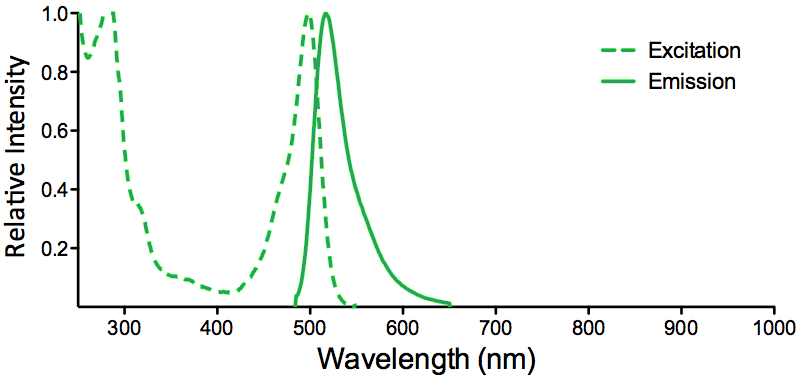
Dylight 488 Fluorophore Absorption and Emission Spectrum Optical Properties:

λex = 493 nm

λem = 518 nm

εmax = 7.0×10⁴

Laser = 488 nm


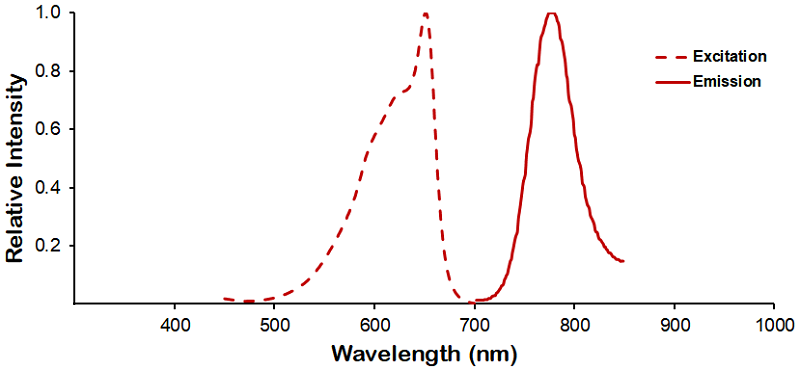
APC/Cy7
Overview:

  • High quantum yield
  • Excellent batch-to-batch reproducibility
  • Stringently QC tested

APC-Cy7 Datasheet


ACP-Cy7 Fluorophore Absorption and Emission Spectrum Optical Properties:

λex = 652 nm

λem = 790 nm

Laser = 594 or 633 nm


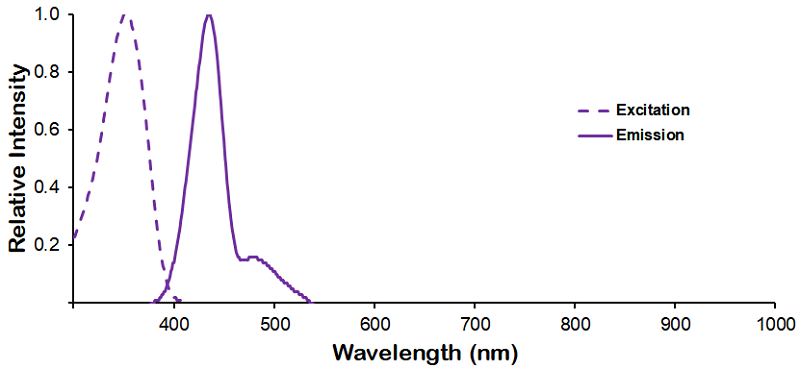
  Dylight 350
Overview:

  • High fluorescence intensity
  • High photostability
  • Less pH-sensitive
  • Excellent solubility in water
  • Stringently QC tested
  • Excellent batch-to-batch reproducibility
  • Molecular weight: 874 g/mol

Dylight 350 Datasheet

Dylight 350 Fluorophore Absorption and Emission Spectrum Optical Properties:

λex = 353 nm

λem = 432 nm

εmax = 1.5×10⁴


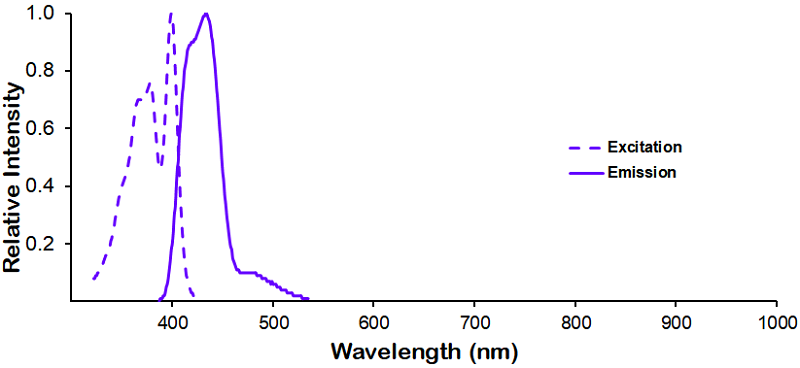
  Dylight 405
Overview:

  • High fluorescence intensity
  • High photostability
  • Less pH-sensitive
  • Excellent batch-to-batch reproducibility
  • Stringently QC tested
  • Molecular weight: 793 g/mol

Dylight 405 Datasheet

Dylight 405 Fluorophore Absorption and Emission Spectrum Optical Properties:

λex = 400 nm

λem = 420 nm

εmax = 3.0×10⁴

Laser = 405 nm


Dylight 594
Overview:

  • High fluorescence yield
  • High photostability
  • Less pH-sensitive
  • Excellent batch-to-batch reproducibility
  • Stringently QC tested
  • Molecular weight: 1078 g/mol

Dylight 594 Datasheet

Dylight 594 Fluorophore Absorption and Emission Spectrum Optical Properties:

λex = 593 nm

λem = 618 nm

εmax = 8.0×10⁴

Laser = 526 nm


 Dylight 633
Overview:

  • High fluorescence yield
  • High photostability
  • Less pH-sensitive
  • Excellent batch-to-batch reproducibility
  • Stringently QC tested
  • Molecular weight: 1066 g/mol

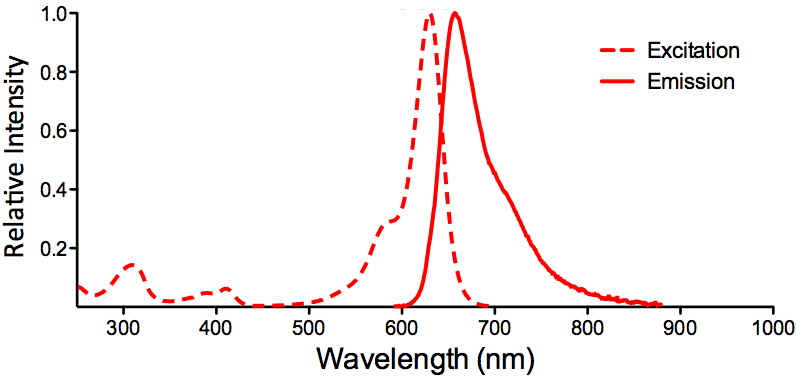
Dylight 633 Datasheet

Dylight 633 Fluorophore Absorption and Emission Spectrum Optical Properties:

λex = 638 nm

λem = 658 nm

εmax = 1.7×10⁵

Laser = 633 nm


 PerCP 
Overview:

  • Peridinin-Chlorophyll-Protein Complex
  • Small phycobiliprotein
  • Isolated from red algae
  • Large stokes shift (195 nm)
  • Molecular Weight: 35 kDa
  • Applications: The listed applications provide a general overview of potential uses for conjugated antibodies. However, they do not guarantee that every antibody-conjugate combination has been tested or validated for these specific applications.

PerCP Datasheet

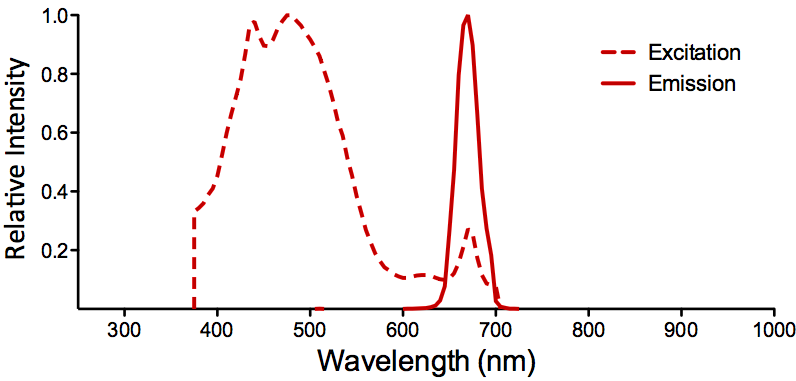
 PerCP Fluorophore Absorption and Emission Spectrum Optical Properties:

λex = 482 nm

λem = 677 nm

εmax = 1.96 x 10⁶

Laser = 488 nm


 PE/ATTO 594
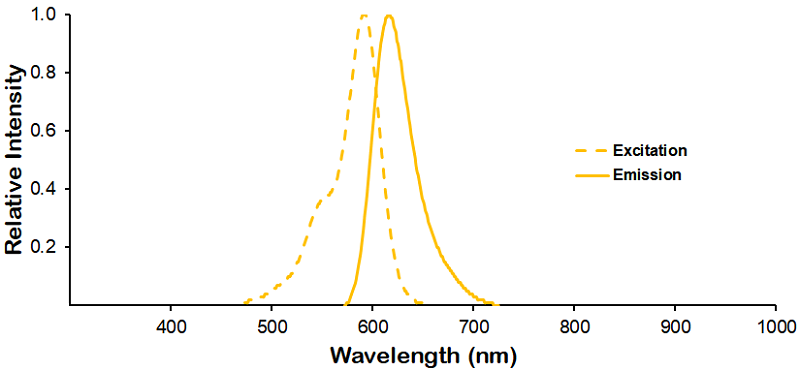
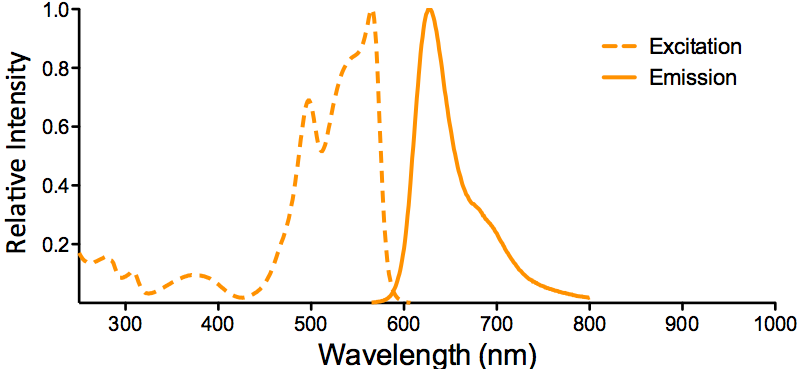
PE/ATTO 594 is a tandem conjugate, where PE is excited at 535 nm and transfers energy to ATTO 594 via FRET (fluorescence resonance energy transfer), which emits at 627 nm.
Overview:

  • High fluorescence yield
  • High photostability
  • Very hydrophilic
  • Excellent solubility in water
  • Very little aggregation

PE/ATTO 594 Datasheet

PE-ATTO 594 Fluorophore Conjugate Excitation and Emission Spectra Optical Properties:

λex = 535 nm

λem = 627 nm

Laser = 488 to 561 nm


  FITC (Fluorescein)
Overview:

  • Excellent fluorescence quantum yield
  • High rate of photobleaching
  • Good solubility in water
  • Broad emission spectrum
  • pH dependent spectra
  • Molecular formula: C20H12O5
  • Molar mass: 332.3 g/mol
  • Applications: The listed applications provide a general overview of potential uses for conjugated antibodies. However, they do not guarantee that every antibody-conjugate combination has been tested or validated for these specific applications.

FITC-Fluorescent-conjugate

FITC Fluorescein Fluorophore Excitation and Emission Spectra Optical Properties:

λex = 494 nm

λem = 520 nm

εmax = 7.3×10⁴

Φf = 0.92

τfl = 5.0 ns

Brightness = 67.2

Laser = 488 nm

Filter set = FITC


 ATTO 700
Overview:

  • High fluorescence yield
  • Excellent thermal and photostability
  • Quenched by electron donors
  • Very hydrophilic
  • Good solubility in polar solvents
  • Zwitterionic dye
  • Molar Mass: 575 g/mol

ATTO 700 Datasheet

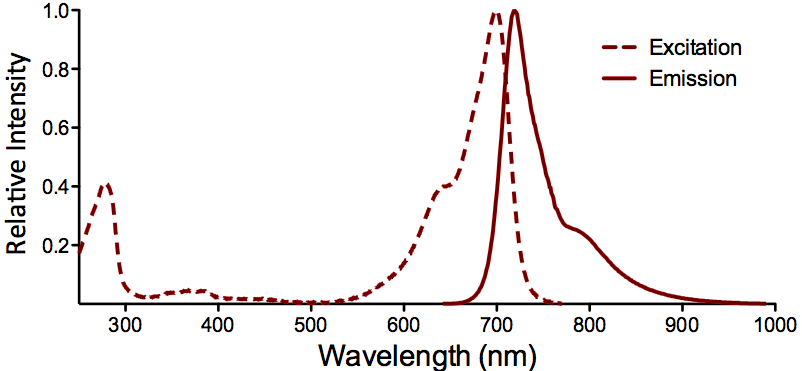
 ATTO 700 Fluorophore Absorption and Emission Spectrum Optical Properties:

λex = 700 nm

λem = 719 nm

εmax = 1.25×10⁵

Φf = 0.25

τfl = 1.6 ns

Brightness = 31.3

Laser = 676 nm

Filter set = Cy®5.5


 ATTO 680
Overview:

  • High fluorescence yield
  • Excellent thermal and photostability
  • Quenched by electron donors
  • Very hydrophilic
  • Good solubility in polar solvents
  • Zwitterionic dye
  • Molar Mass: 631 g/mol

ATTO 680 Datasheet

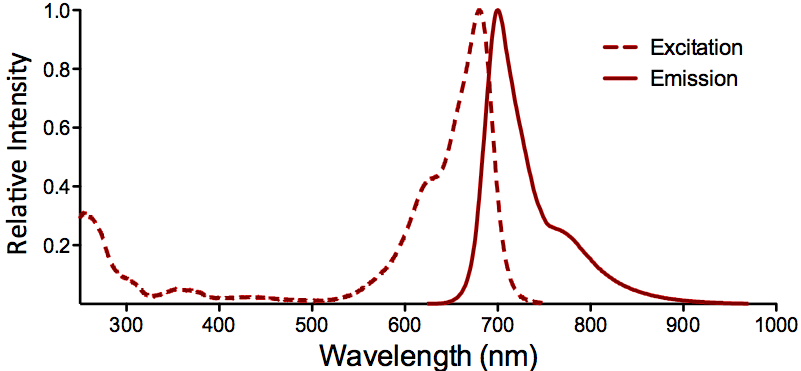
 ATTO 680 Fluorophore Absorption and Emission Spectrum Optical Properties:

λex = 680 nm

λem = 700 nm

εmax = 1.25×10⁵

Φf = 0.30

τfl = 1.7 ns

Brightness = 37.5

Laser = 633 – 676 nm

Filter set = Cy®5.5


 ATTO 655
Overview:

  • High fluorescence yield
  • High thermal and photostability
  • Excellent ozone resistance
  • Quenched by electron donors
  • Very hydrophilic
  • Good solubility in polar solvents
  • Zwitterionic dye
  • Molar Mass: 634 g/mol

ATTO 655 Datasheet

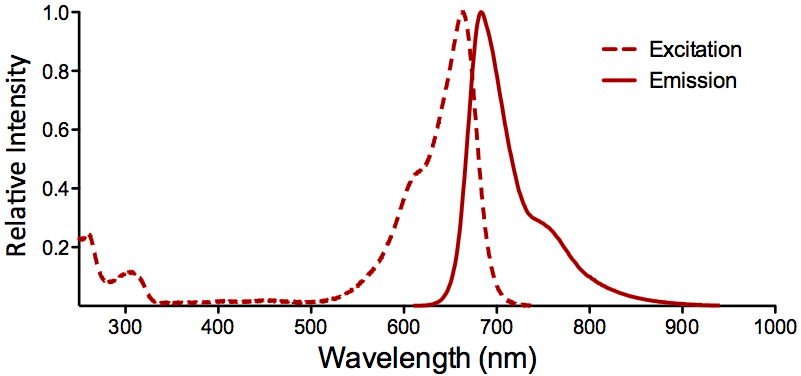
ATTO 655 Fluorophore Absorption and Emission Spectrum Optical Properties:

λex = 663 nm

λem = 684 nm

εmax = 1.25×10⁵

Φf = 0.30

τfl = 1.8 ns

Brightness = 37.5

Laser = 633 – 647 nm

Filter set = Cy®5


 ATTO 633
Overview:

  • High fluorescence yield
  • High thermal and photostability
  • Moderately hydrophilic
  • Good solubility in polar solvents
  • Stable at pH 4 – 11
  • Cationic dye, perchlorate salt
  • Molar Mass: 652.2 g/mol

ATTO 633 Datasheet

ATTO 633 Fluorophore Absorption and Emission Spectrum Optical Properties:

λex = 629 nm

λem = 657 nm

εmax = 1.3×10⁵

Φf = 0.64

τfl = 3.2 ns

Brightness = 83.2

Laser = 633 nm

Filter set = Cy®5


 ATTO 594
Overview:

  • High fluorescence yield
  • High photostability
  • Very hydrophilic
  • Excellent solubility in water
  • Very little aggregation
  • New dye with net charge of -1
  • Molar Mass: 1137 g/mol
  • Applications: The listed applications provide a general overview of potential uses for conjugated antibodies. However, they do not guarantee that every antibody-conjugate combination has been tested or validated for these specific applications.

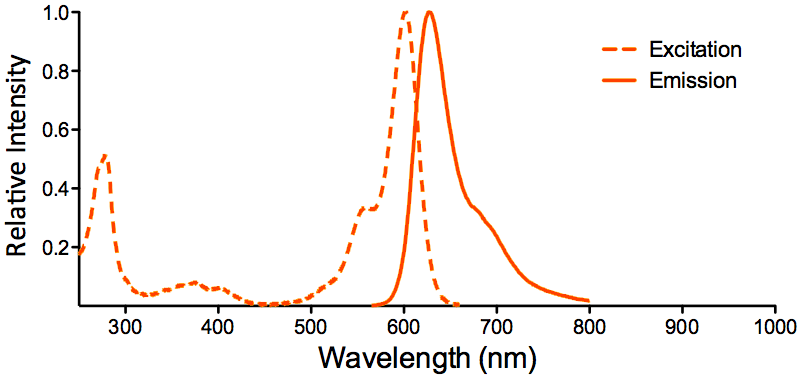
ATTO 594 Datasheet

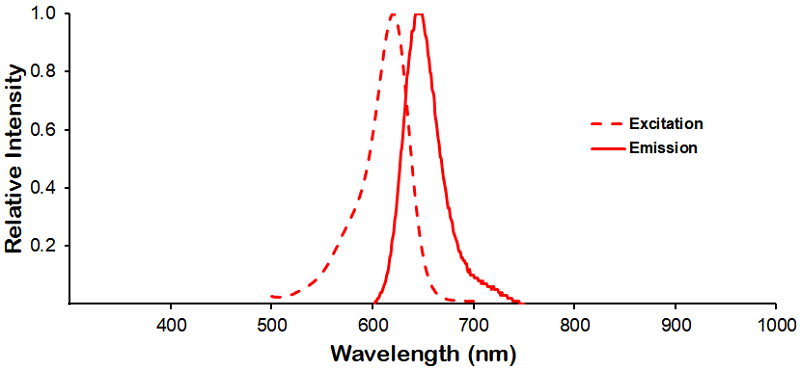
 ATTO 594 Fluorophore Excitation and Emission Spectrum Optical Properties:

λex = 601 nm

λem = 627 nm

εmax = 1.2×10⁵

Φf = 0.85

τfl = 3.5 ns

Brightness = 102

Laser = 594 nm

Filter set = Texas Red®


 ATTO 565
Overview:

  • High fluorescence yield
  • High thermal and photostability
  • Good solubility in polar solvents
  • Excellent solubility in water
  • Very little aggregation
  • Rhodamine dye derivative
  • Molar Mass: 611 g/mol

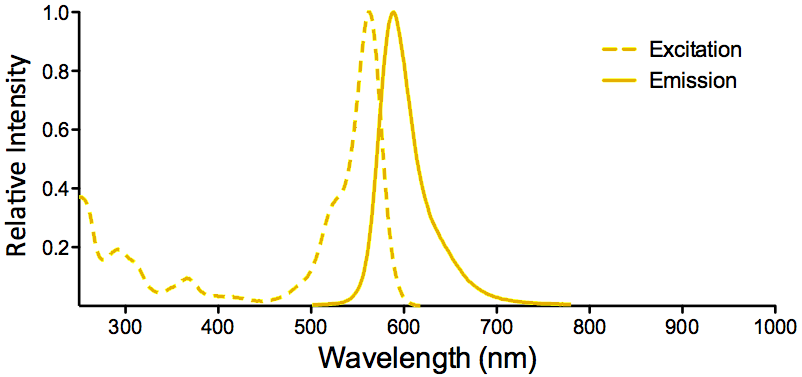
ATTO 565 Datasheet

 ATTO 565 Fluorophore Excitation and Emission Spectra Optical Properties:

λex = 563 nm

λem = 592 nm

εmax = 1.2×10⁵

Φf = 0.9

τfl = 3.4 n

Brightness = 10

Laser = 532 nm

Filter set = TRITC


  ATTO 488
Overview:

  • High fluorescence yield
  • High photostability
  • Very hydrophilic
  • Excellent solubility in water
  • Very little aggregation
  • New dye with net charge of -1
  • Molar Mass: 804 g/mol
  • Applications: The listed applications provide a general overview of potential uses for conjugated antibodies. However, they do not guarantee that every antibody-conjugate combination has been tested or validated for these specific applications. 

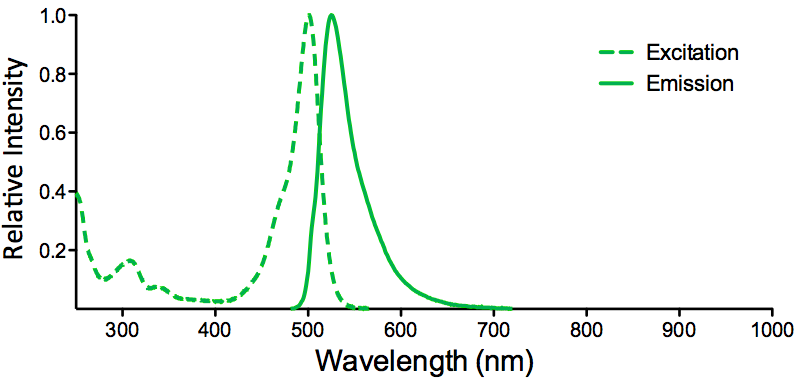
ATTO 488 Datasheet

  ATTO 488 Fluorophore Excitation and Emission Spectra Optical Properties:

λex = 501 nm

λem = 523 nm

εmax = 9.0×10⁴

Φf = 0.80

τfl = 4.1 ns

Brightness = 72

Laser = 488 nm

Filter set = FITC


  ATTO 390
Overview:

  • High fluorescence yield
  • Large Stokes-shift (89 nm)
  • Good photostability
  • Moderately hydrophilic
  • Good solubility in polar solvents
  • Coumarin derivate, uncharged
  • Low molar mass: 343.42 g/mol
  • Applications: The listed applications provide a general overview of potential uses for conjugated antibodies. However, they do not guarantee that every antibody-conjugate combination has been tested or validated for these specific applications. 

ATTO 390 Datasheet

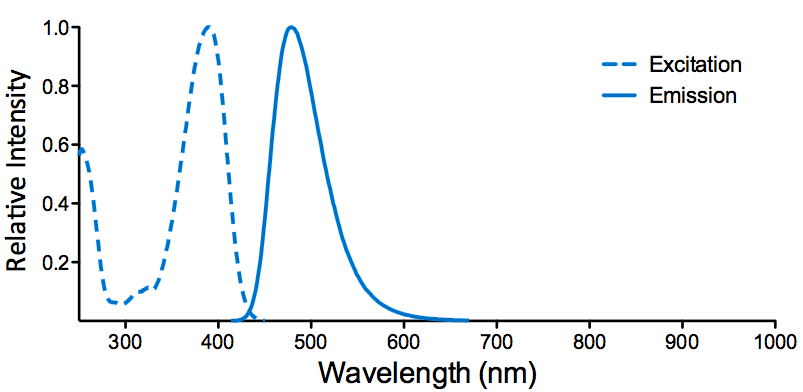
ATTO 390 Fluorescent Dye Excitation and Emission Spectra Optical Properties:

λex = 390 nm

λem = 479 nm

εmax = 2.4×10⁴

Φf = 0.90

τfl = 5.0 ns

Brightness = 21.6

Laser = 365 or 405 nm


APC (Allophycocyanin)
Overview:

  • High quantum yield
  • Large phycobiliprotein
  • 6 chromophores per molecule
  • Isolated from red algae
  • Molecular Weight: 105 kDa
  • Applications: The listed applications provide a general overview of potential uses for conjugated antibodies. However, they do not guarantee that every antibody-conjugate combination has been tested or validated for these specific applications.

APC Datasheet

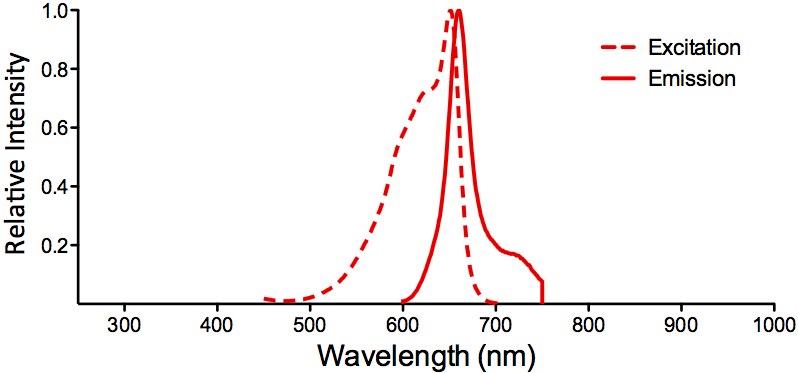
 APC Fluorophore Absorption and Emission Spectrum Optical Properties:

λex = 650 nm

λem = 660 nm

εmax = 7.0×10⁵

Φf = 0.68

Brightness = 476

Laser = 594 or 633 nm

Filter set = Cy®5


Streptavidin

Properties:

  • Homo-tetrameric protein purified from Streptomyces avidinii which binds four biotin molecules with extremely high affinity
  • Molecular weight: 53 kDa
  • Formula: C10H16N2O3S
  • Applications: Western blot, immunohistochemistry, and ELISA

Streptavidin Datasheet

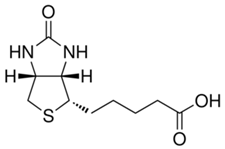
BiotinBiotin Conjugate Structure

Properties:

  • Binds tetrameric avidin proteins including Streptavidin and neuravidin with very high affinity
  • Molar mass: 244.31 g/mol
  • Formula: C10H16N2O3S
  • Applications: Western blot, immunohistochemistry, and ELISA*

*The listed applications provide a general overview of potential uses for conjugated antibodies. However, they do not guarantee that every antibody-conjugate combination has been tested or validated for these specific applications.

Biotin Datasheet

HRP (Horseradish peroxidase)

Properties:

  • Enzymatic activity is used to amplify weak signals and increase visibility of a target
  • Readily combines with hydrogen peroxide (H2O2) to form HRP-H2O2 complex which can oxidize various hydrogen donors
  • Catalyzes the conversion of:
    • Chromogenic substrates (e.g. TMB, DAB, ABTS) into coloured products
    • Chemiluminescent substrates (e.g. luminol and isoluminol) into light emitting products via enhanced chemiluminescence (ECL)
    • Fluorogenic substrates (e.g. tyramine, homovanillic acid, and 4-hydroxyphenyl acetic acid) into fluorescent products
  • High turnover rate enables rapid generation of a strong signal
  • 44 kDa glycoprotein
  • Extinction coefficient: 100 (403 nm)
  • Applications: Western blot, immunohistochemistry, and ELISA*
    • *The listed applications provide a general overview of potential uses for conjugated antibodies. However, they do not guarantee that every antibody-conjugate combination has been tested or validated for these specific applications.

HRP Datasheet

AP (Alkaline Phosphatase)

Properties:

  • Broad enzymatic activity for phosphate esters of alcohols, amines, pyrophosphate, and phenols
  • Commonly used to dephosphorylate the 5’-termini of DNA and RNA to prevent self-ligation
  • Catalyzes the conversion of:
    • Chromogenic substrates (e.g. pNPP, naphthol AS-TR phosphate, BCIP) into coloured products
    • Fluorogenic substrates (e.g. 4-methylumbelliferyl phosphate) into fluorescent products
  • Molecular weight: 140 kDa
  • Applications: Western blot, immunohistochemistry, and ELISA

AP Datasheet

  R-PE (R-Phycoerythrin)
Overview:

  • Broad excitation spectrum
  • High quantum yield
  • Photostable
  • Member of the phycobiliprotein family
  • Isolated from red algae
  • Excellent solubility in water
  • Molecular Weight: 250 kDa


  • Applications: The listed applications provide a general overview of potential uses for conjugated antibodies. However, they do not guarantee that every antibody-conjugate combination has been tested or validated for these specific applications.

R-PE Datasheet

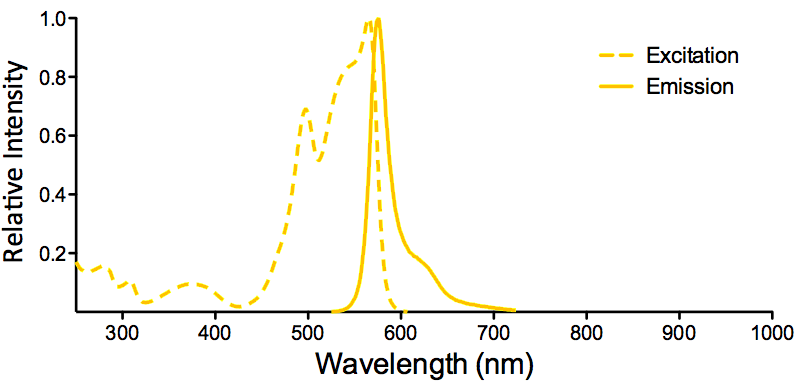
 R-PE Fluorophore Excitation and Emission Spectra Optical Properties:

λex = 565 nm

λem = 575 nm

εmax = 2.0×10⁶

Φf = 0.84

Brightness = 1.68 x 10³

Laser = 488 to 561 nm

Filter set = TRITC


Nature Recombinant
Species Human
Expression System E. coli
Amino Acid Sequence MDVFMKGLSKAKEGVVAAAEKTKQGVAEAAGKTKEGVLYVGSKTKEGVVHGVATVAEKTKEQVTNVGGAVVTGVTAVAQKTVQGAGSIAAATGFVKKDQLGKNEEGAPQEGILEDMPVDPDNEAYEMPSEEGYQDYEPEA
Purity >95%
Other Resources
Protein Length 140 amino acids
Protein Size ~14.46 kDa
Field of Use Not for use in humans. Not for use in diagnostics or therapeutics. For in vitro research use only.

Properties

Storage Buffer PBS pH 7.4
Storage Temperature -80ºC
Shipping Temperature Dry Ice. Shipping note: Product will be shipped separately from other products purchased in the same order.
Purification Ion-exchange Purified
Cite This Product Human Recombinant Alpha Synuclein E83Q Mutant Pre-formed Fibrils (StressMarq Biosciences | Victoria, BC CANADA | Catalog# SPR-539)
Certificate of Analysis Starting monomers are certified > 95% pure via SDS-PAGE and A260/A280 ratio
Other Relevant Information For corresponding monomers, see Catalog # SPR-538.

Biological Description

Alternative Names Alpha Synuclein E83Q, Alpha-Synuclein E83Q, α synuclein E83Q, E83Q synuclein, Alpha Synuclein E83Q mutant, SNCA E83Q mutation, Alpha Synuclein NAC mutation E83Q, SNCA E83Q Aggregated Protein, Seeding‑Competent Alpha‑Synuclein E83Q Fibrils
Research Areas Neurodegeneration, Neuroscience, Parkinson's Disease, Synuclein
Swiss Prot P37840
Scientific Background Alpha Synuclein E83Q is a rare missense variant of the SNCA gene, in which glutamate is replaced by glutamine at residue 83 within the non-amyloid-β component (NAC) region, a sequence central to alpha-synuclein aggregation and fibril formation. E83Q was initially identified in a patient presenting with parkinsonism, progressive non-amnestic dementia, severe frontotemporal atrophy, and extensive cortical Lewy body pathology in the absence of tau or TDP-43 pathology. Subsequent biochemical, structural, cellular, and neuronal studies demonstrated that E83Q markedly accelerates alpha-synuclein fibrillization, produces fibrils with altered structural and dynamic properties, and is associated with increased alpha-synuclein accumulation, Ser129 phosphorylation, cellular toxicity, neuronal fibril uptake, and seeding activity relative to wild-type alpha-synuclein. StressMarq’s Human Recombinant Alpha Synuclein E83Q Mutant Monomers have been demonstrated to self-aggregate readily and form pre-formed fibrils (PFFs) that exhibit reduced Thioflavin T (ThT) binding relative to PFFs formed by wild-type alpha synuclein.
References 1. Kapasi, A., Brosch, J. R., Nudelman, K. N., Agrawal, S., Foroud, T. M., & Schneider, J. A. (2020). A novel SNCA E83Q mutation in a case of dementia with Lewy bodies and atypical frontotemporal lobar degeneration. Neuropathology, 40, 620–626. DOI: 10.1111/neup.12687
2. Kumar, S. T., Mahul-Mellier, A.-L., Hegde, R. N., Rivière, G., Moons, R., Ibáñez de Opakua, A., Magalhães, P., Rostami, I., Donzelli, S., Sobott, F., Zweckstetter, M., & Lashuel, H. A. (2022). A NAC domain mutation (E83Q) unlocks the pathogenicity of human alpha-synuclein and recapitulates its pathological diversity. Science Advances, 8(17), eabn0044. DOI: 10.1126/sciadv.abn0044
3. Magalhães, P., & Lashuel, H. A. (2022). Opportunities and challenges of alpha-synuclein as a potential biomarker for Parkinson’s disease and other synucleinopathies. npj Parkinson’s Disease, 8, 93. DOI: 10.1038/s41531-022-00357-0

Product Images

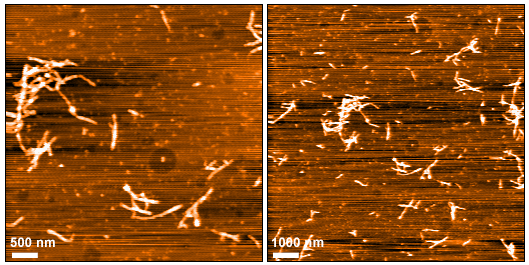
<p>Atomic force microscopy analysis of Alpha Synuclein E83Q Mutant Pre-Formed Fibrils (Cat # SPR-539) diluted to 0.5 mg/mL with dH2O mounted on freshly cleaved mica, washed, dried and analyzed with tapping mode. Representative images are 5 x 5 µm x-y (left) and 10 x 10 µm x-y (right).</p>

Atomic force microscopy analysis of Alpha Synuclein E83Q Mutant Pre-Formed Fibrils (Cat # SPR-539) diluted to 0.5 mg/mL with dH2O mounted on freshly cleaved mica, washed, dried and analyzed with tapping mode. Representative images are 5 x 5 µm x-y (left) and 10 x 10 µm x-y (right).
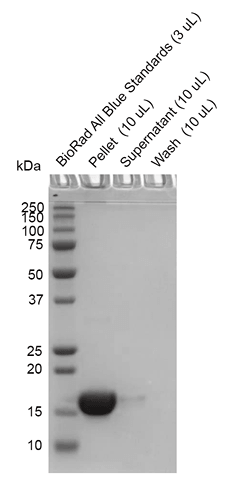
<p>Sedimentation assay on Alpha Synuclein E83Q Mutant Pre-Formed Fibrils (Cat # SPR-539). Samples were spun down at 15,000 x g, washed, and then spun down again. Fibril samples are prepared in denaturing conditions prior to running on the gel. SDS-PAGE analysis on a 12% Bis-Tris gel shows that the majority of the fibril is insoluble.</p>

Sedimentation assay on Alpha Synuclein E83Q Mutant Pre-Formed Fibrils (Cat # SPR-539). Samples were spun down at 15,000 x g, washed, and then spun down again. Fibril samples are prepared in denaturing conditions prior to running on the gel. SDS-PAGE analysis on a 12% Bis-Tris gel shows that the majority of the fibril is insoluble.
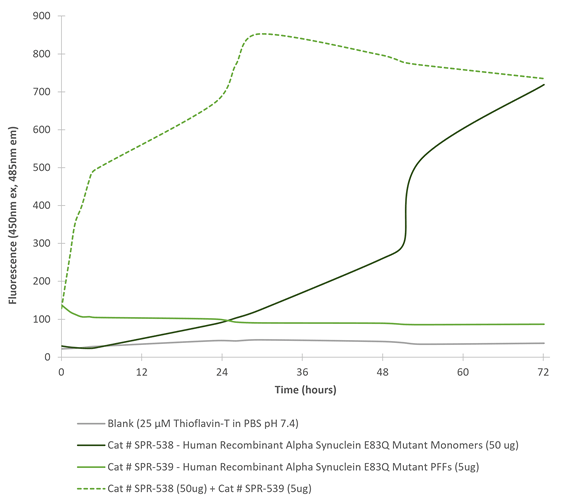
<p>In vitro seeding activity of Alpha Synuclein E83Q Mutant Pre-Formed Fibrils in a Thioflavin T (ThT) assay. Alpha Synuclein E83Q Mutant Pre-Formed Fibrils (Cat # SPR-539) seed fibril formation of Alpha Synuclein E83Q Mutant Monomers (Cat # SPR-538) over 72 hours. Reactions (100uL) shaken at 600 rpm in Greiner-Bio 96 Well Non-Binding Cell Culture Microplates, Black (Greiner-Bio Catalog #655900) at 37oC in the presence of 25 uM ThT and read with an XPS Microplate Reader set at 450nmex/485nmem.</p>

In vitro seeding activity of Alpha Synuclein E83Q Mutant Pre-Formed Fibrils in a Thioflavin T (ThT) assay. Alpha Synuclein E83Q Mutant Pre-Formed Fibrils (Cat # SPR-539) seed fibril formation of Alpha Synuclein E83Q Mutant Monomers (Cat # SPR-538) over 72 hours. Reactions (100uL) shaken at 600 rpm in Greiner-Bio 96 Well Non-Binding Cell Culture Microplates, Black (Greiner-Bio Catalog #655900) at 37oC in the presence of 25 uM ThT and read with an XPS Microplate Reader set at 450nmex/485nmem.
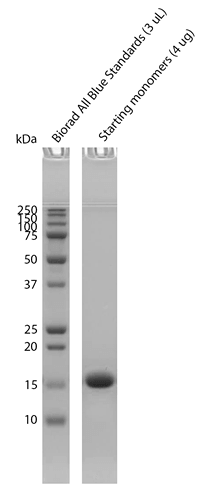
<p>SDS-PAGE analysis of purified starting monomers (pre-fibrillization) on a 12% Bis-Tris gel.</p>

SDS-PAGE analysis of purified starting monomers (pre-fibrillization) on a 12% Bis-Tris gel.

Reviews

Reviews

There are no reviews yet.

Be the first to review “Alpha Synuclein E83Q Mutant Pre-formed Fibrils”

Your email address will not be published. Required fields are marked *