
Advancing the Frontiers of Neurodegenerative Disease Research

| Product Name | Alpha Synuclein Pre-formed Fibrils: ATTO 594 | |||||||||||||||||||||||||||||||||||||||||||||||||||||||||||||||||||||||||||||||||
| Description |
Human Recombinant Alpha Synuclein PFFs: ATTO 594 (Type 1) |
|||||||||||||||||||||||||||||||||||||||||||||||||||||||||||||||||||||||||||||||||
| Applications | WB, SDS-PAGE, In vivo assay, In vitro assay | |||||||||||||||||||||||||||||||||||||||||||||||||||||||||||||||||||||||||||||||||
| Concentration | Lot/batch specific. See included datasheet. | |||||||||||||||||||||||||||||||||||||||||||||||||||||||||||||||||||||||||||||||||
| Conjugates |
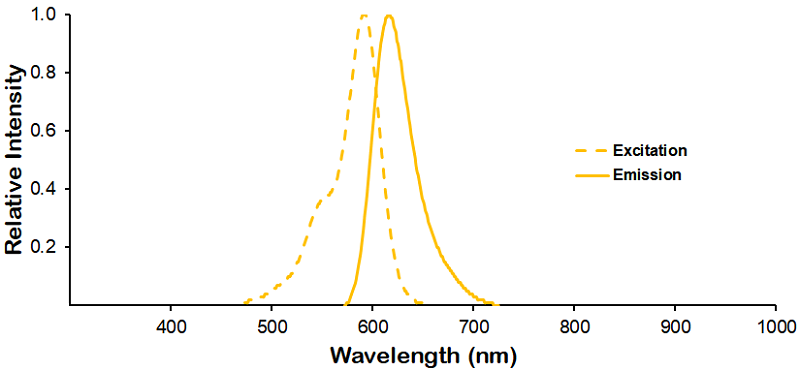
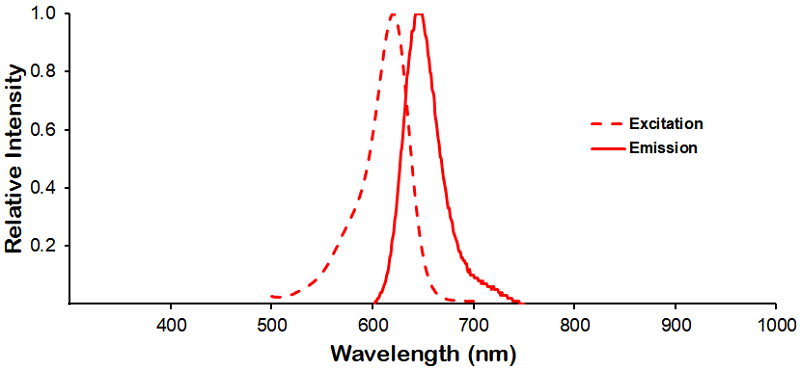
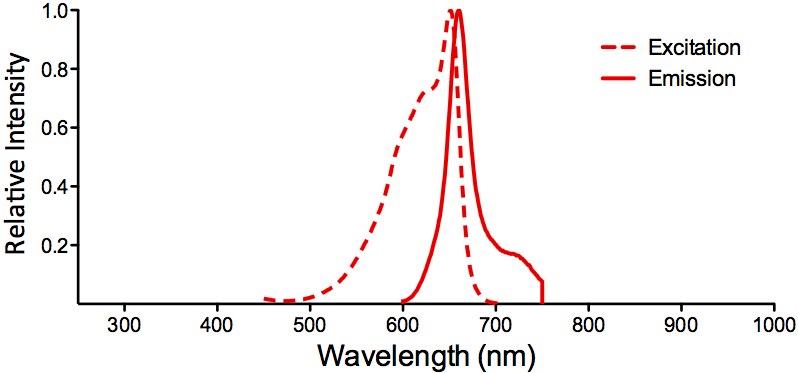
ATTO 594
StreptavidinProperties:
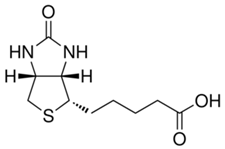
Biotin
|
|||||||||||||||||||||||||||||||||||||||||||||||||||||||||||||||||||||||||||||||||
| Nature | Recombinant | |||||||||||||||||||||||||||||||||||||||||||||||||||||||||||||||||||||||||||||||||
| Species | Human | |||||||||||||||||||||||||||||||||||||||||||||||||||||||||||||||||||||||||||||||||
| Expression System | E. coli | |||||||||||||||||||||||||||||||||||||||||||||||||||||||||||||||||||||||||||||||||
| Amino Acid Sequence | MDVFMKGLSK AKEGVVAAAE KTKQGVAEAA GKTKEGVLYV GSKTKEGVVH GVATVAEKTK EQVTNVGGAV VTGVTAVAQK TVEGAGSIAA ATGFVKKDQL GKNEEGAPQE GILEDMPVDP DNEAYEMPSE EGYQDYEPEA | |||||||||||||||||||||||||||||||||||||||||||||||||||||||||||||||||||||||||||||||||
| Purity | >95% | |||||||||||||||||||||||||||||||||||||||||||||||||||||||||||||||||||||||||||||||||
| Other Resources | Sonication Protocol | |||||||||||||||||||||||||||||||||||||||||||||||||||||||||||||||||||||||||||||||||
| Protein Length | Full Length | |||||||||||||||||||||||||||||||||||||||||||||||||||||||||||||||||||||||||||||||||
| Protein Size | N/A | |||||||||||||||||||||||||||||||||||||||||||||||||||||||||||||||||||||||||||||||||
| Biological Activity | Under Investigation | |||||||||||||||||||||||||||||||||||||||||||||||||||||||||||||||||||||||||||||||||
| Field of Use | Not for use in humans. Not for use in diagnostics or therapeutics. For in vitro research use only. | |||||||||||||||||||||||||||||||||||||||||||||||||||||||||||||||||||||||||||||||||
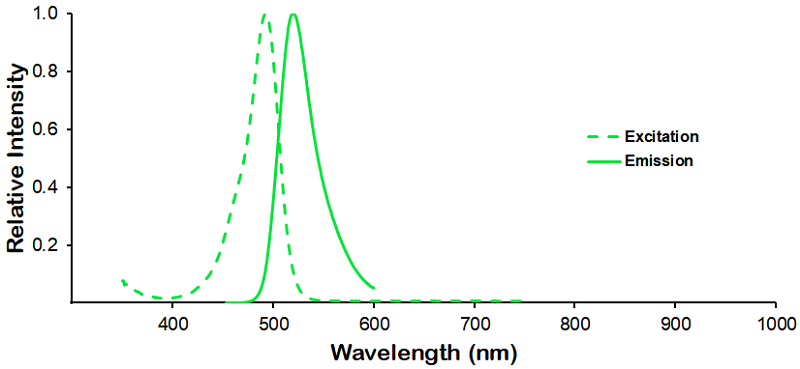
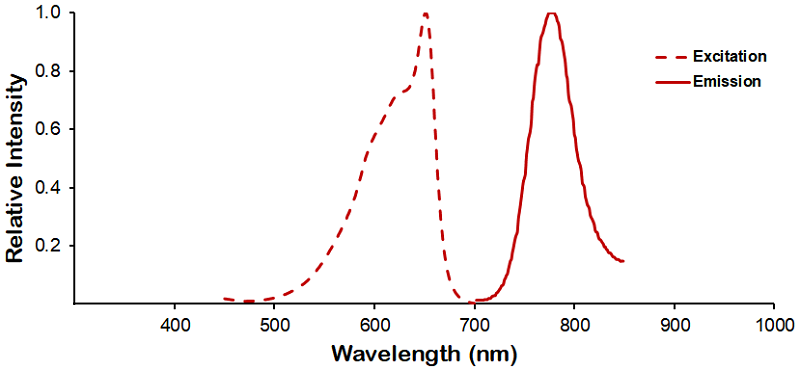
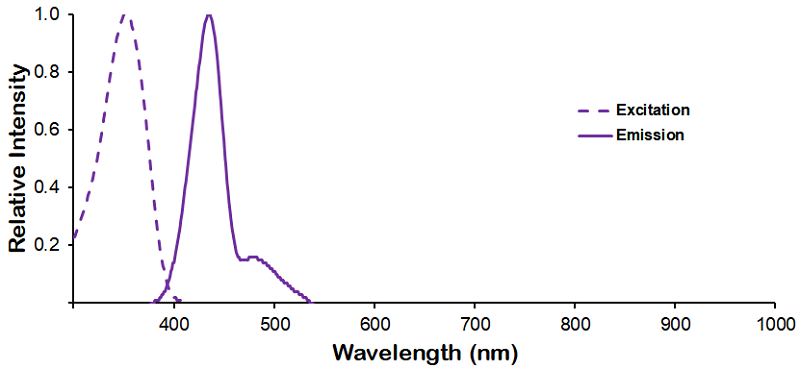
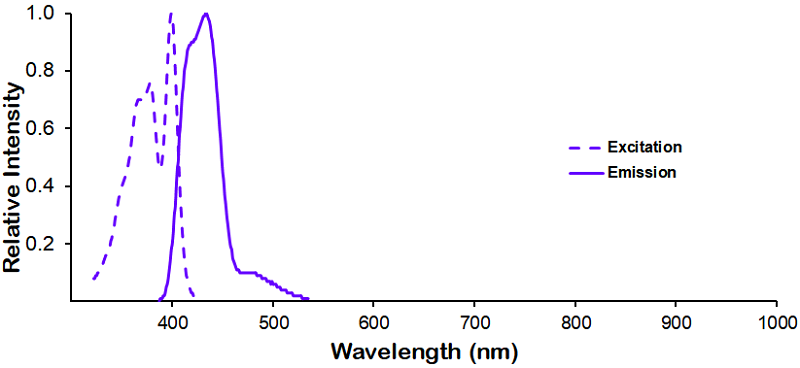
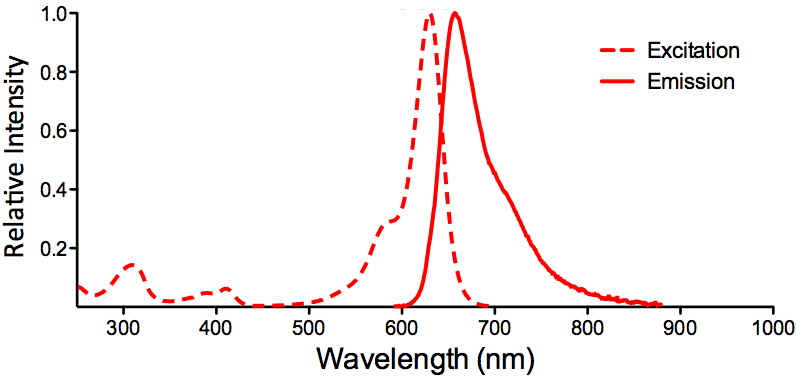
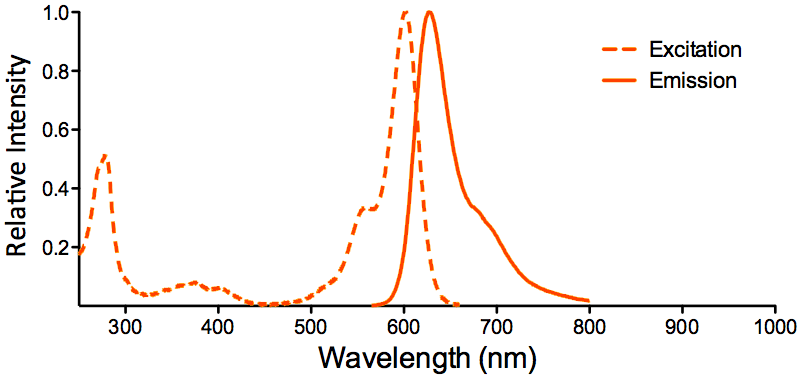
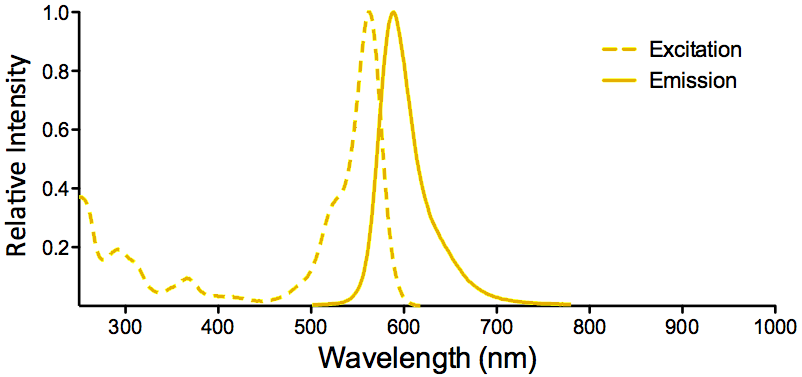
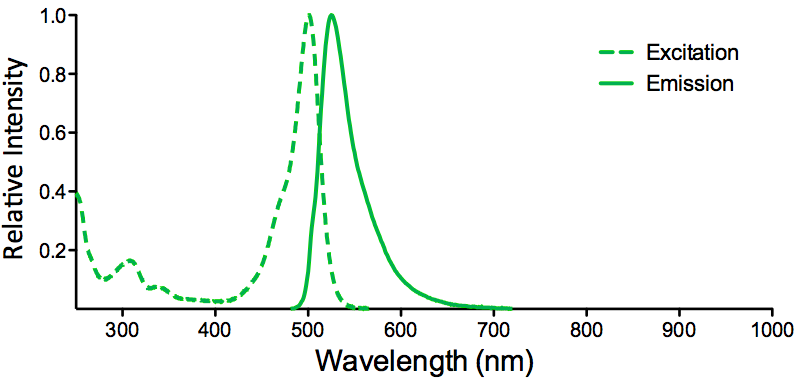
Properties
| Storage Buffer | PBS pH7.4, 0.09% Azide |
| Storage Temperature | -80ºC |
| Shipping Temperature | Dry Ice. Shipping note: Product will be shipped separately from other products purchased in the same order. |
| Purification | Ion-exchange Purified |
| Cite This Product | Human Recombinant Alpha Synuclein Pre-formed Fibrils: ATTO 594 (StressMarq Biosciences | Victoria, BC CANADA | Catalog# SPR-322-A594) |
| Certificate of Analysis | Thioflavin T emission curve shows increased fluorescence (correlated to protein fibrillation) when active alpha Synuclein PFFs:ATTO-594 are combined with active alpha Synuclein monomers. Passed sterility test (OD600 equivalent to negative control (dH20) after 72 hr incubation at 37C, 200 rpm in rich medium) |
| Other Relevant Information | For best results, sonicate immediately prior to use. Refer to the Neurodegenerative Protein Handling Instructions on our website, or the product datasheet for further information. Monomer source is catalog# SPR-321. |
Biological Description
| Alternative Names | Alpha-synuclein, Alpha synuclein, Asyn, SNCA, NACP, PARK1, PARK4, PD1, Synuclein alpha, Non-A beta component of AD amyloid, Non-A4 component of amyloid precursor, Synuclein Alpha-140, SYN, Parkinson's disease familial 1 Protein Protein, Alpha Synuclein PFFs, ATTO labelled Alpha Synuclein fibrils |
| Research Areas | Alzheimer's Disease, Neurodegeneration, Neuroscience, Parkinson's Disease, Synuclein, Tangles & Tau, Multiple System Atrophy |
| Cellular Localization | Cytoplasm, Membrane, Nucleus |
| Accession Number | NP_000336.1 |
| Gene ID | 6622 |
| Swiss Prot | P37840 |
| Scientific Background |
Alpha-synuclein (α-syn), a neuronal protein encoded by the SNCA gene, plays a critical role in synaptic function, including vesicle trafficking and neurotransmitter release. Under physiological conditions, α-syn exists primarily in monomeric or tetrameric forms. However, pathological misfolding of α-syn can lead to the formation of pre-formed fibrils (PFFs), which are central to the progression of synucleinopathies such as Parkinson’s disease, Lewy body dementia, and multiple system atrophy. PFFs are structurally stable aggregates that act as seeds for the recruitment and conversion of native α-syn into toxic fibrillar forms. This seeding mechanism initiates a prion-like spread of misfolded α-syn across neuronal networks, leading to the accumulation of Lewy bodies and neurites—hallmarks of neurodegenerative pathology. The presence of PFFs disrupts cellular homeostasis, impairs mitochondrial function, and activates neuroinflammatory responses, contributing to progressive neuronal dysfunction and death. Experimental models utilizing α-syn PFFs have demonstrated their capacity to replicate disease-like features, including synaptic deficits, motor impairments, and widespread protein aggregation. These models are instrumental in elucidating disease mechanisms and identifying therapeutic targets. Targeting the formation, propagation, or cellular uptake of α-syn PFFs represents a promising strategy for disease modification. Advances in understanding the molecular behavior of PFFs are paving the way for novel interventions aimed at halting or reversing neurodegenerative processes. |
| References |
1. “Genetics Home Reference: SNCA”. US National Library of Medicine. (2013). 2. Zhang L., et al. (2008) Brain Res. 1244: 40-52. 3. Alim M.A., et al. (2002) J Biol Chem. 277(3): 2112-2117. 4. Kokhan V.S., Afanasyeva M.A., Van'kin G. (2012) Behav. Brain. Res. 231(1): 226-230. 5. Spillantini M.G., et al. (1997) Nature. 388(6645): 839-840. 6. Mezey E., et al. (1998) Nat Med. 4(7): 755-757. |
Product Images
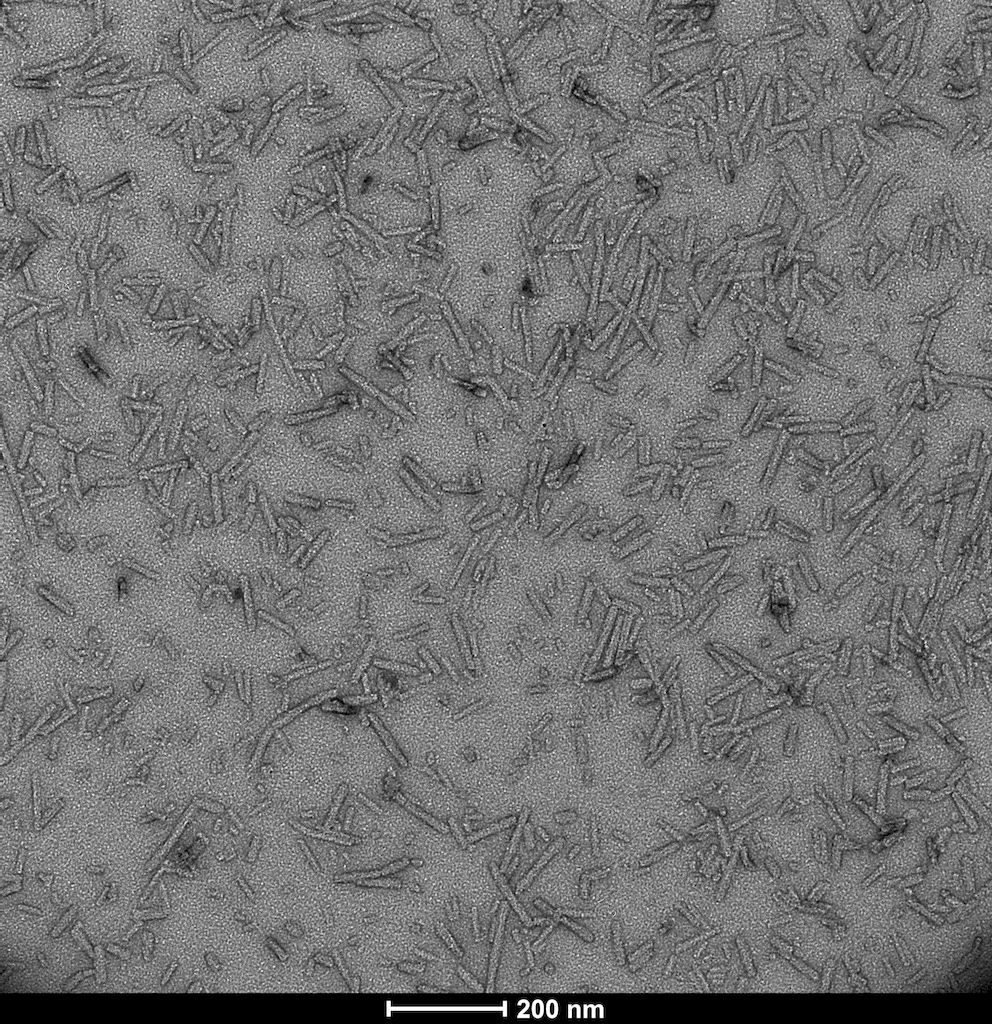
TEM of ATTO 594-conjugated alpha synuclein PFFs (SPR-322-A594)
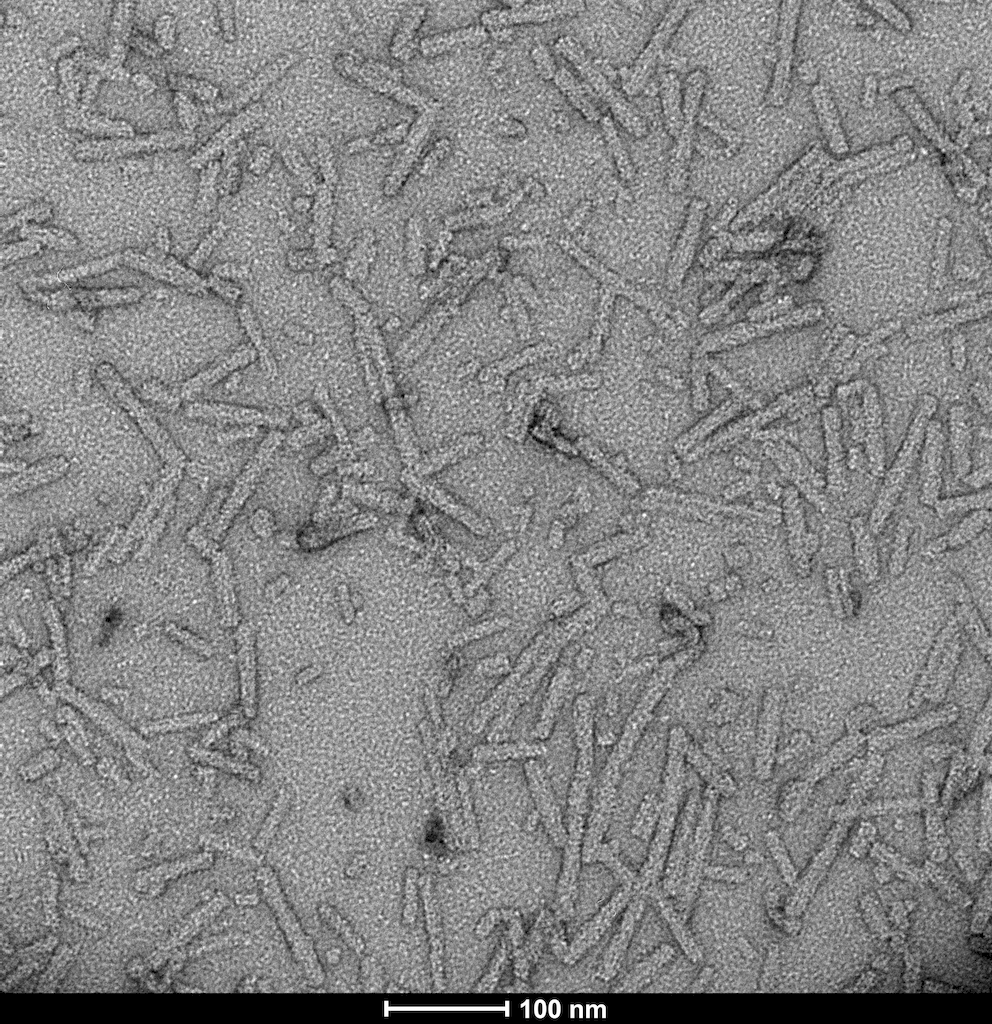
TEM of ATTO 594-conjugated alpha synuclein PFFs (SPR-322-A594)
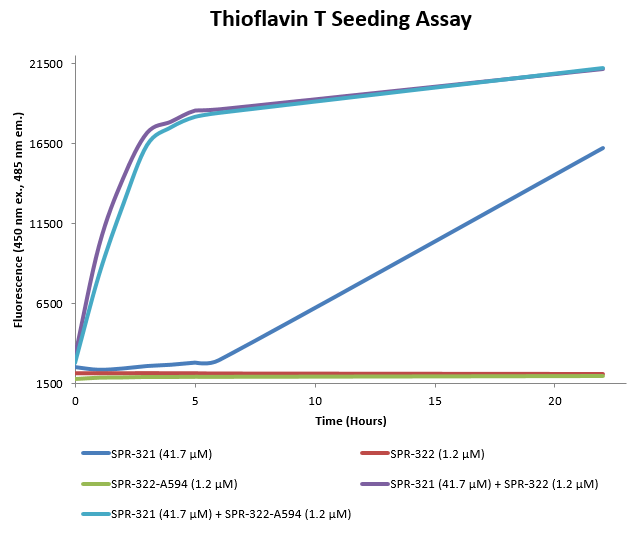
Thioflavin T is a fluorescent dye that binds to beta sheet-rich structures, such as those in alpha synuclein fibrils. ATTO 594-conjugated alpha synuclein pre-formed fibrils (SPR-322-A594) show similar seeding capabilities as uncojugated alpha synuclein pre-formed fibrils (SPR-322) when combined with monomers. Plate Used: HTRF 96-well low volume white plate (Cisbio). Reaction Volume: 15 uL. Thioflavin T Concentration: 40 uM. SDS Catalyst concentration: 0.73 mM. Incubation: 37C, 600 rpm.
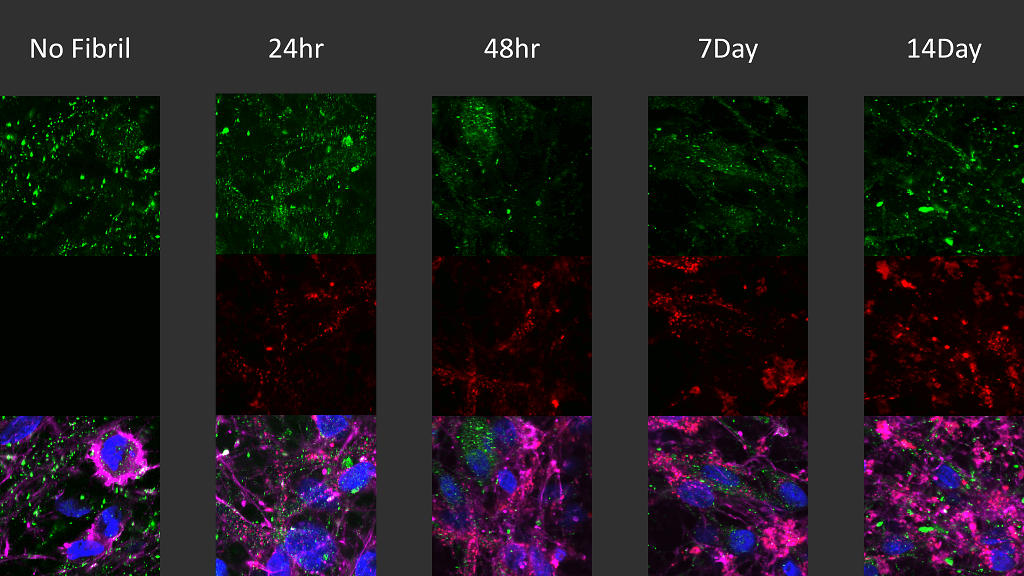
Immunocytochemistry / Immunofluorescence analysis of human iPSC-derived neurons (Stem Cell Catalog Code ASE-9321KF) treated with 2.5µg ATTO 594 labeled type I alpha-synuclein pre-formed fibrils (SPR-322-A594) for up to 14 days. Cells seeded at 8k cells per well. Green: mouse anti-alpha synuclein (pSer129) monoclonal antibody (SMC-600) 1:5000; Red: alpha-synuclein PFFs (SPR-322-A594); Pink: actin; Blue: Hoechst / DNA.
 Powered by Bioz
StressMarq Biosciences :
Based on validation through cited publications.