
Advancing the Frontiers of Neurodegenerative Disease Research

| Product Name | Tau (K18) P301L Mutant Pre-formed Fibrils | |||||||||||||||||||||||||||||||||||||||||||||||||||||||||||||||||||||||||||||||||
| Description |
Human Recombinant Tau (K18) P301L Mutant PFFs |
|||||||||||||||||||||||||||||||||||||||||||||||||||||||||||||||||||||||||||||||||
| Applications | WB, SDS-PAGE, In vivo assay, In vitro assay | |||||||||||||||||||||||||||||||||||||||||||||||||||||||||||||||||||||||||||||||||
| Concentration | 2 mg/mL | |||||||||||||||||||||||||||||||||||||||||||||||||||||||||||||||||||||||||||||||||
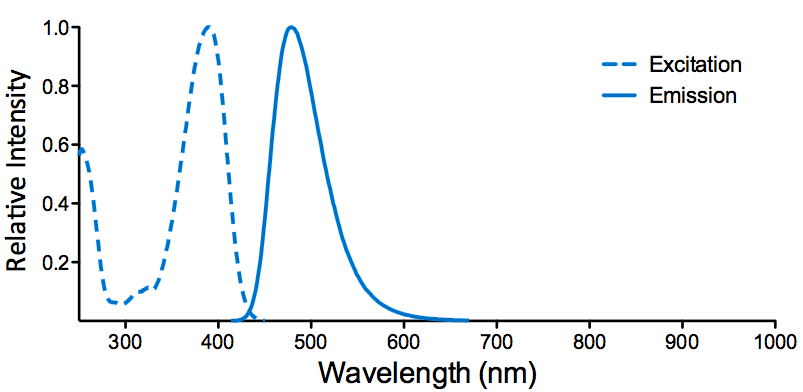
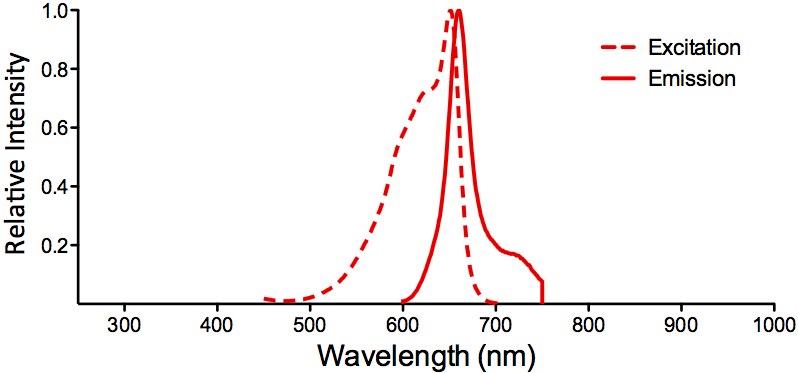
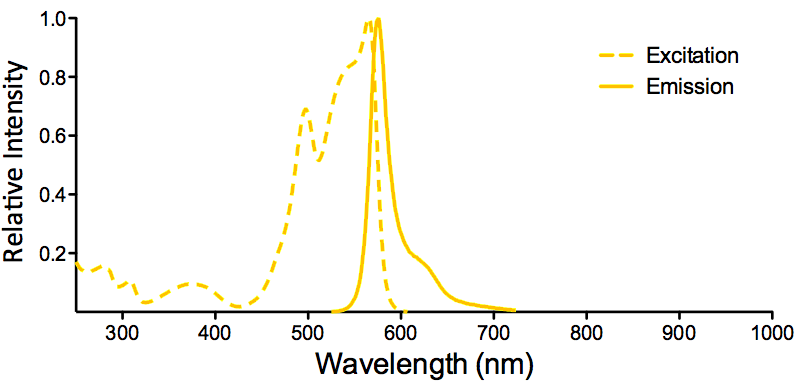
| Conjugates |
No tag
StreptavidinProperties:
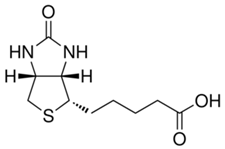
Biotin
|
|||||||||||||||||||||||||||||||||||||||||||||||||||||||||||||||||||||||||||||||||
| Nature | Recombinant | |||||||||||||||||||||||||||||||||||||||||||||||||||||||||||||||||||||||||||||||||
| Species | Human | |||||||||||||||||||||||||||||||||||||||||||||||||||||||||||||||||||||||||||||||||
| Expression System | E. coli | |||||||||||||||||||||||||||||||||||||||||||||||||||||||||||||||||||||||||||||||||
| Amino Acid Sequence | MSRLQTAPVPM PDLKNVKSKI GSTENLKHQP GGGKVQIINK KLDLSNVQSK CGSKDNIKHVLGGGSVQIVY KPVDLSKVTS KCGSLGNIHH KPGGGQVEVK SEKLDFKDRV QSKIGSLDNI THVPGGGNKK IETHKLTFRE | |||||||||||||||||||||||||||||||||||||||||||||||||||||||||||||||||||||||||||||||||
| Purity | >95% | |||||||||||||||||||||||||||||||||||||||||||||||||||||||||||||||||||||||||||||||||
| Other Resources | Sonication Protocol | |||||||||||||||||||||||||||||||||||||||||||||||||||||||||||||||||||||||||||||||||
| Protein Length | Partial | |||||||||||||||||||||||||||||||||||||||||||||||||||||||||||||||||||||||||||||||||
| Protein Size | ~15.1 kDa | |||||||||||||||||||||||||||||||||||||||||||||||||||||||||||||||||||||||||||||||||
| Biological Activity | Thioflavin T emission curve shows increased fluorescence (correlated to tau protein fibrillation) when active tau PFFs are combined with active tau monomers. | |||||||||||||||||||||||||||||||||||||||||||||||||||||||||||||||||||||||||||||||||
| Field of Use | Not for use in humans. Not for use in diagnostics or therapeutics. For in vitro research use only. | |||||||||||||||||||||||||||||||||||||||||||||||||||||||||||||||||||||||||||||||||
Properties
| Storage Buffer | 10 mM HEPES, 100 mM NaCl pH 7.4 |
| Storage Temperature | -80ºC |
| Shipping Temperature | Dry Ice. Shipping note: Product will be shipped separately from other products purchased in the same order. |
| Purification | Ion-exchange Purified |
| Cite This Product | Human Recombinant Tau (K18) P301L Mutant Pre-formed Fibrils (StressMarq Biosciences | Victoria, BC CANADA | Catalog# SPR-330) |
| Certificate of Analysis | Certified >95% pure using SDS-PAGE analysis. Made with low endotoxin monomer. |
| Other Relevant Information | For best results, sonicate immediately prior to use. Refer to the Neurodegenerative Protein Handling Instructions on our website, or the product datasheet for further information. Monomer source is catalog# SPR-328. |
Biological Description
| Alternative Names | Tau K18 P301L, Tau P301L mutant, Tau PFFs, Tau PFF, Tau aggregates, microtubule-associated tau, MAPT, MAP, Paired Helical Filament-Tau, Phf-Tau, Neurofibrillary Tangle, G Protein Beta1/Gamma2 Subunit-Interacting Factor 1, Isoform 4, tubulin-associated unit, Tau PFFs |
| Research Areas | Alzheimer's Disease, Axon Markers, Cell Markers, Cell Signaling, Cytoskeleton, Microtubules, MT Associated Proteins, Neurodegeneration, Neuron Markers, Neuroscience, Tangles & Tau |
| Cellular Localization | Axolemma, Axolemma Plasma Membrane, Axon, Cell Body, Cell membrane, Cytoplasm, Cytoplasmic Ribonucleoprotein Granule, Cytoplasmic Side, Cytoskeleton, Cytosol, Dendrite, Growth cone, Microtubule, Microtubule Associated Complex, Neurofibrillary Tangle, Neuronal Cell Body, Nuclear Periphery, Nuclear Speck, Nucleus, Peripheral membrane protein, Plasma Membrane, Tubulin Complex |
| Gene ID | 4137 |
| Swiss Prot | P10636 |
| Scientific Background |
Tau is a microtubule-associated protein encoded by the MAPT gene, essential for maintaining neuronal structure and axonal transport. The K18 fragment, comprising the four microtubule-binding repeat domains of tau, serves as a minimal model for studying tau aggregation. The P301L mutation, a proline-to-leucine substitution at residue 301, is linked to familial frontotemporal dementia and significantly enhances tau’s aggregation propensity. Pre-formed fibrils (PFFs) generated from Tau (K18) P301L mutant proteins replicate key features of pathological tau aggregates observed in tauopathies. These fibrils act as potent seeds, initiating the misfolding and aggregation of endogenous tau in a prion-like fashion. This seeding process drives the spread of tau pathology across neuronal networks, contributing to synaptic dysfunction, neuroinflammation, and progressive neurodegeneration. In experimental models, Tau (K18) P301L PFFs induce early tau pathology, including the formation of neurofibrillary tangles and tau-positive inclusions. These models are instrumental in elucidating the molecular mechanisms underlying tau propagation, cellular toxicity, and disease progression. The P301L mutation also influences tau’s interaction with microtubules and its susceptibility to post-translational modifications, further exacerbating its pathogenic potential. Tau (K18) P301L mutant PFFs are critical tools for preclinical research, enabling high-throughput screening of therapeutic candidates aimed at inhibiting tau aggregation, enhancing clearance, and restoring neuronal function. Their use accelerates the development of targeted interventions for tau-driven neurodegenerative diseases. |
| References |
1. www.alz.org/alzheimers-dementia/facts-figures 2. Alzheimer, A. Über eine eigenartige Erkrankung der Hirnrinde. Allg. Z. Psychiatr. Psych.-Gerichtl. Med. 64, 146–148 (1907) 3. Matsumoto, G. et al. (2018). Int J Mol Sci. 19, 1497. 4. Goedert, M. and Spillantini, M. G. (2017). Mol Brain. 10:18. 5. Guo, J. and Lee, M.Y. (2013). FEBS Lett. 587(6): 717-723. 6. Alberici, A. et al. (2004). J Neurol Neurosurg Psychiatry. 75:1607-1610. |
Product Images
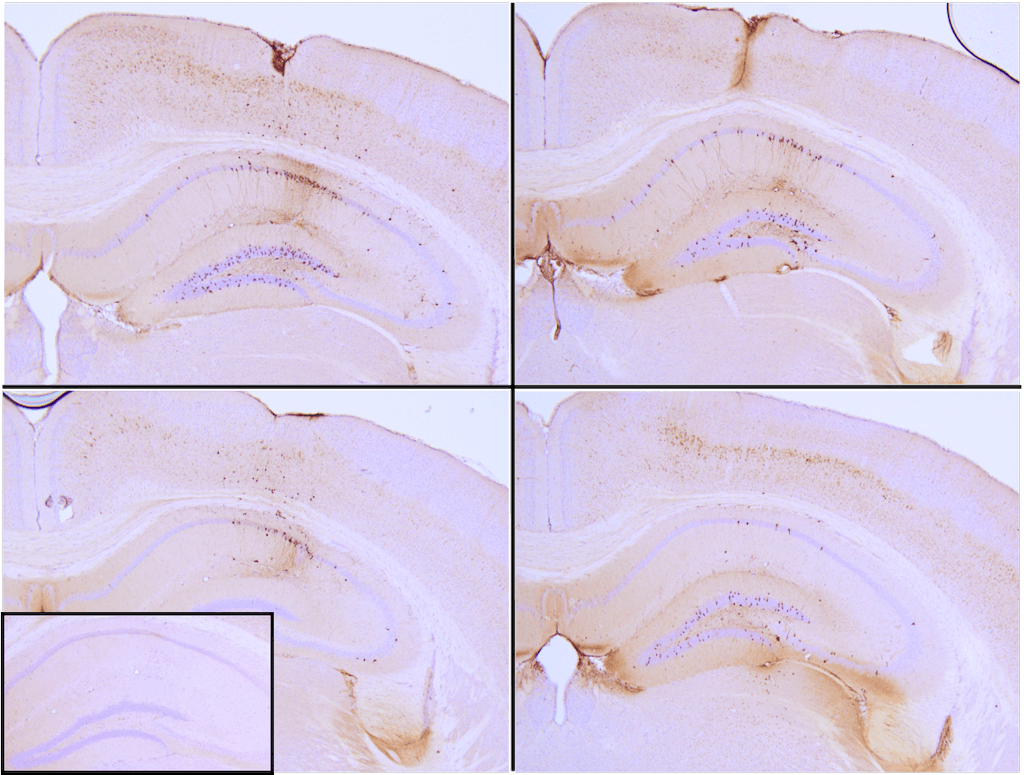
Immunohistochemistry analysis of P301L mouse hippocampus injected with K18 P301L tau PFFs (SPR-330) shows seeding of tau pathology at injection site nine weeks post-injection. AT8 (pSer202/pThr205) tau antibody shows tangle-like inclusions. Inset: negative control. Experiments performed at reMYND N.V.
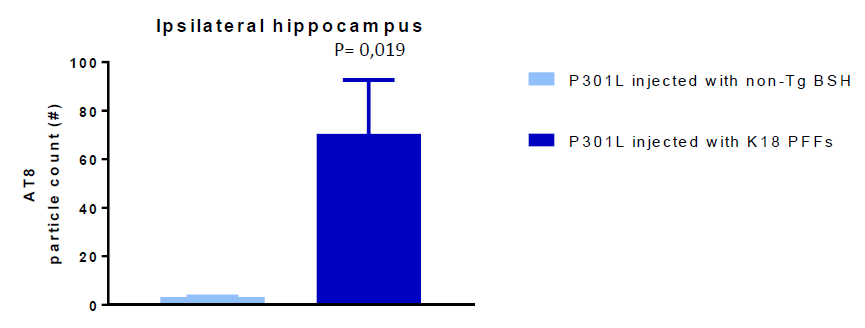
AT8 is an anti-pSer202/pThr205 tau antibody. Tau P301L mice injected with brainstem homogenate (BSH) of non-Tg mice have hardly any AT8-positive inclusions. AT8-positive tangle-like inclusions is significantly higher in K18 PFF injected mice compared to the negative control. Experiments performed at reMYND N.V.
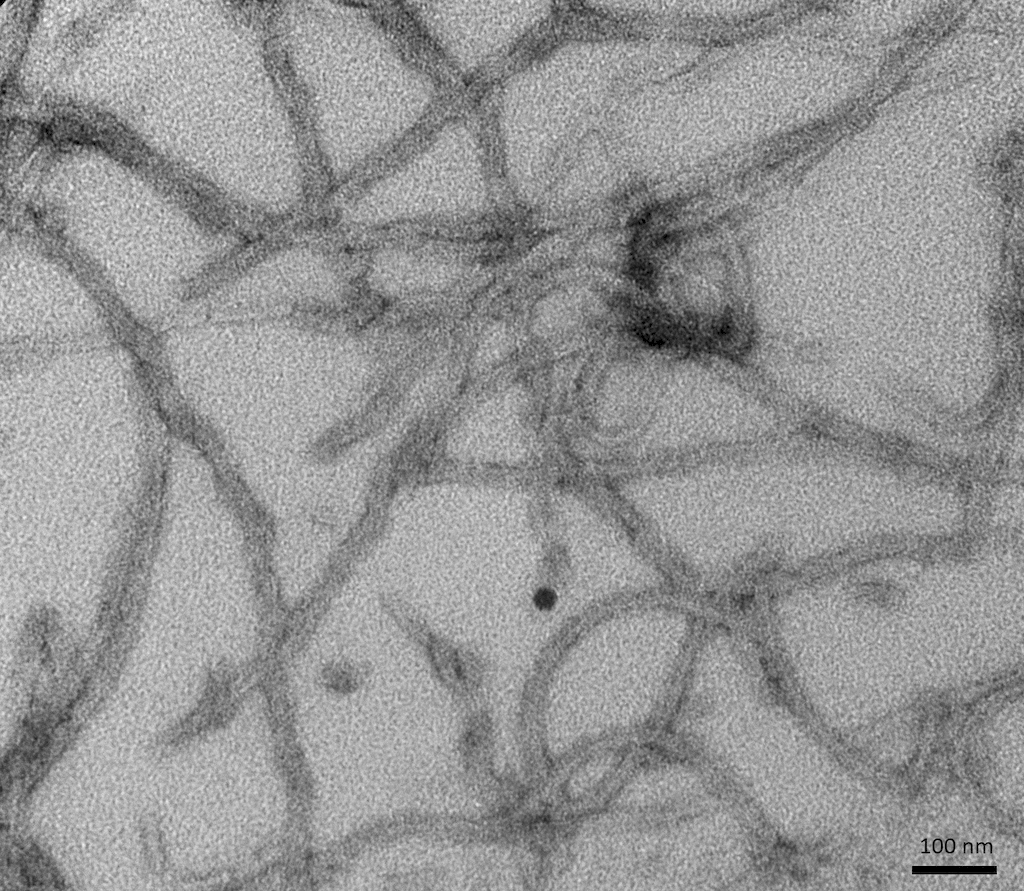
TEM of recombinant Tau (K18), P301L mutant Pre-formed fibrils (PFFs) at 150kx magnification. HV=80kV.
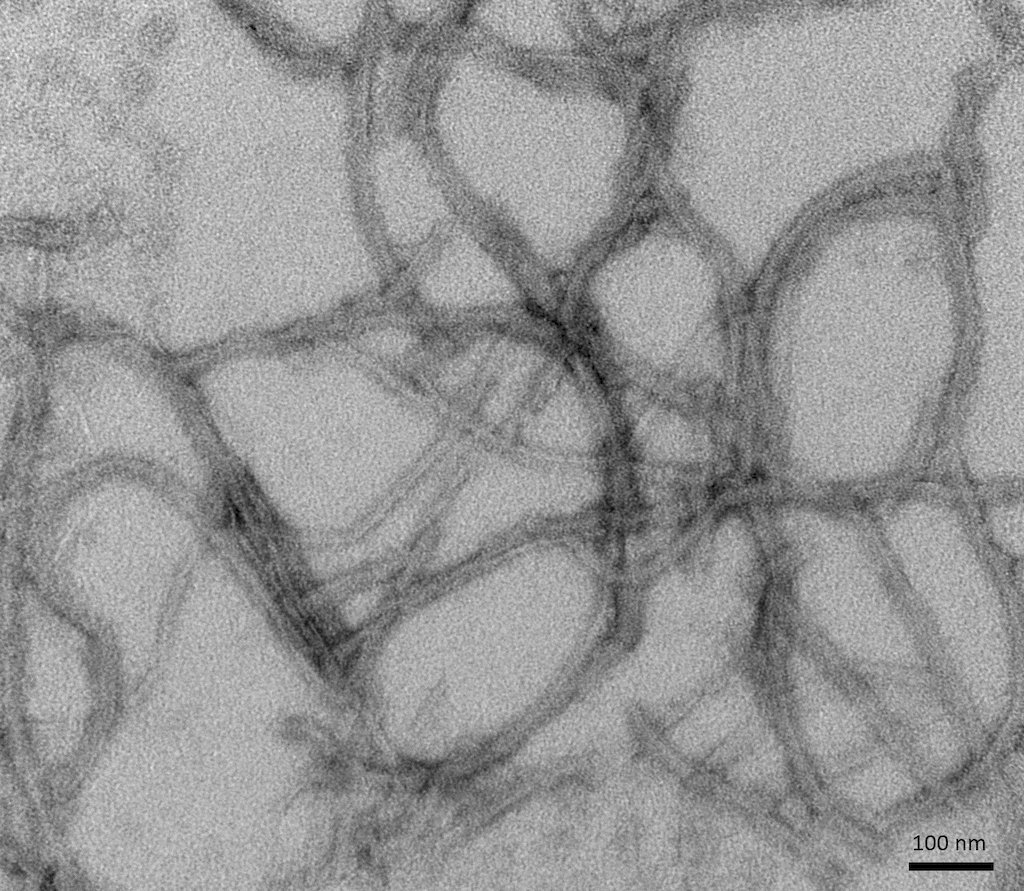
TEM of recombinant Tau (K18), P301L mutant Pre-formed fibrils (PFFs) at 150kx magnification. HV=80kV.
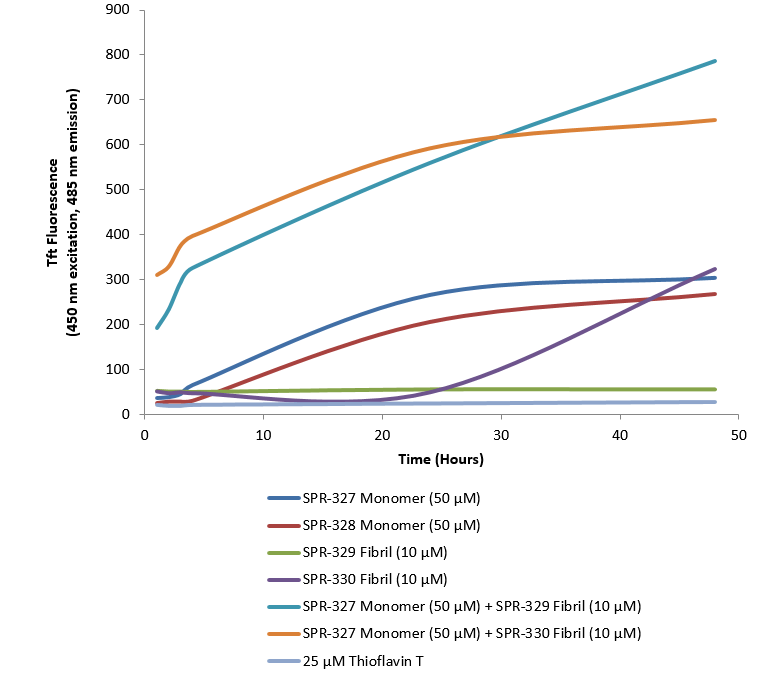
Thioflavin T is a fluorescent dye that binds to beta sheet-rich structures, such as those in tau fibrils. Upon binding, the emission spectrum of the dye experiences a red-shift and increased fluorescence intensity. Thioflavin T emission curves show increased fluorescence (correlated to tau aggregation) over time in tau Pre-formed fibrils (SPR-330). Tau Pre-formed fibrils (SPR-330) seed the formation of new tau fibrils when combined with tau monomers (SPR-327). Thioflavin T ex = 450 nm, em = 485 nm. 10 uM heparin was added to each well.
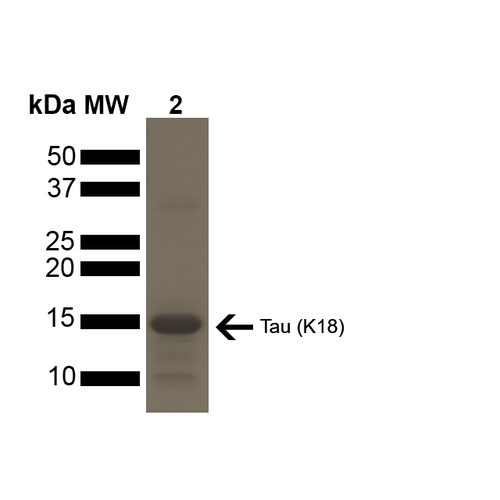
SDS-PAGE of ~15 kDa Active Human Tau Protein K18 P301L Pre-formed Fibrils (SPR-330). Lane 1: MW Ladder. Lane 2: Tau Protein Pre-formed Fibrils (SPR-330).
 Powered by Bioz
StressMarq Biosciences :
Based on validation through cited publications.
james cohen :
Tau protein influences many neurodegenerative diseases, such as Alzheimer’s disease and traumatic brain injuries.
they are abundant proteins in the central nervous system.
These results show that blood-borne tau proteins could contribute to brain tauopathies.