

Enhancing the Astrocytic Clearance of Amyloid Beta
Scientists estimate that the healthy adult human brain contains tens of billions of neurons – specialized cells that actively transmit information through precisely coordinated electrochemical signaling. Historically, researchers have conceptualized Alzheimer’s disease (AD) as a neuron‑centric disorder, driven by the extracellular accumulation of insoluble amyloid beta aggregates and the intracellular formation of tau neurofibrillary tangles within neurons. These pathological features disrupt synaptic function and ultimately drive neurodegeneration.
However, in recent years, glial cells such as microglia, astrocytes, and oligodendrocytes have emerged as critical regulators of central nervous system homeostasis. Indeed, these non-neuronal cells comprise the majority of brain cells, and work in tandem with cerebral blood vessels to facilitate essential metabolic, structural, and immune-supportive functions. Dysregulation of glial activity is now understood to play a central role in the initiation and progression of neurodegenerative disease pathology.
Emerging therapeutic targets
Although substantial research efforts have focused on the inhibition and prevention of amyloid beta production and aggregation, the development of therapeutic strategies capable of clearing pre-existing amyloid pathology represent an equally essential endeavour. A breakthrough study by Choi et al., published in Nature Neuroscience, identifies the astrocytic transcription factor Sox9 as a key regulator of amyloid pathology and cognitive function, highlighting a promising astrocyte-based mechanism with significant implications for the treatment of Alzheimer’s disease pathology.
Modulation of homeostasis
Astrocytes perform diverse functions essential for neuronal viability and stability, including neurotransmitter regulation, metabolic support, and modulation of synaptic activity. These homeostatic roles are altered during normal biological aging, and further disrupted in neurodegenerative conditions.
Sox9, a transcription factor broadly expressed in mature astrocytes, has previously been implicated in astrocyte identity and regional specialization. Choi et al. demonstrate that Sox9 expression increases in astrocytes during normal aging and is further elevated in both postmortem human Alzheimer’s disease brain tissue and mouse models of amyloid pathology.
Using a combination of transcriptomic profiling, chromatin immunoprecipitation sequencing (ChIP-seq), and genetically engineered mouse models, generated experimental data confirmed that Sox9 exhibits context-specific regulatory activity. Young, aged, and Alzheimer’s disease brains each display distinct DNA‑binding patterns and transcriptional targets, demonstrating that Sox9 actively reshapes astrocytic gene programs in response to physiological stress and neurodegenerative stimuli.
Sox9 as a protective factor in neurodegeneration
To directly assess the role of Sox9 in Alzheimer’s disease pathogenesis, the authors selectively deleted Sox9 in astrocytes within the APP-NLGF mouse model of amyloidosis. Astrocyte-specific Sox9 removal resulted in exacerbated disease phenotypes, including increased amyloid beta plaque burden in the hippocampus and cortex, enhanced neuritic dystrophy, impaired synaptic plasticity, and significant deficits in learning and memory tasks. These findings establish astrocytic Sox9 as a protective transcriptional regulator that constrains amyloid pathology and supports neural circuit integrity.
In addition, the astrocyte-restricted overexpression of Sox9 produced robust disease-modifying effects. Using adeno-associated viral (AAV) vectors to elevate Sox9 levels selectively in astrocytes, researchers observed enhanced clearance of existing amyloid beta plaques, reduced neuronal damage, and preservation of cognitive performance across multiple behavioral paradigms. Interestingly, Sox9 overexpression did not alter anxiety-related behavior or locomotor activity, supporting a specific effect on cognitive and pathological endpoints rather than generalized behavioral changes.
Utilizing StressMarq’s Amyloid Beta 1-42 Oligomers to examine astrocytic phagocytosis
In order to functionally assess the astrocytic uptake of amyloid beta in vitro, primary astrocytes were cultured on coverslips in 24-well plates and transiently transfected with either a control GFAP-driven vector or a GFAP–Sox9–Flag construct to induce astrocyte-specific Sox9 overexpression. Cells were subsequently switched to serum-free conditions and treated with StressMarq’s Amyloid Beta 1-42 Oligomers (catalog# SPR-488).
Following amyloid beta exposure, astrocytes were washed, fixed with 4% paraformaldehyde, and immunostained for intracellular amyloid beta. Using this assay, it was determined that Sox9 overexpression significantly increased astrocytic uptake of amyloid beta oligomers, demonstrating a direct, cell-autonomous role for Sox9 in promoting astrocytic amyloid clearance. These findings establish a mechanistic link between Sox9-dependent transcriptional regulation, MEGF10-mediated phagocytosis, and enhanced astrocytic handling of pathogenic amyloid beta species.
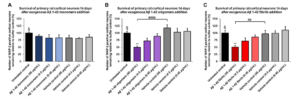
Figure 1. [Image from: StressMarq website] Survival of rat primary cortical neurons 14 days after treatment with different concentrations of Human Amyloid Beta 1-42 Monomers (catalog# SPR-485) (A), Oligomers (catalog# SPR-488) (B) or Pre-formed Fibrils (PFFs) (catalog# SPR-487) (C), quantified by MAP2 positive neurons and expressed as a percentage of control.
Summary
Collectively, these findings redefine astrocytes as active regulators of amyloid pathology and cognitive function in Alzheimer’s disease. Mechanistic analyses revealed that Sox9 enhances astrocyte-mediated phagocytosis of amyloid beta. Transcriptomic profiling identified upregulation of genes associated with phagocytic and endolysosomal pathways, with particular emphasis on MEGF10, an astrocyte-enriched phagocytic receptor. Finally, ChIP-seq analysis further demonstrated direct Sox9 binding at regulatory regions of the Megf10 locus, supporting transcriptional control of this pathway.
Through Sox9-dependent transcriptional mechanisms, astrocytes acquire an enhanced capacity to recognize, engulf, and clear amyloid beta, thereby limiting downstream neurodegenerative processes. Furthermore, these findings indicate astrocytic Sox9 and MEGF10 as compelling targets for future therapeutic development and underscore the importance of astrocyte-specific tools in advancing neurodegeneration research.
Related StressMarq Products
StressMarq specializes in the production of high-quality, cutting-edge tools for neurodegenerative disease research, with a broad range of amyloid beta reagents to meet all research needs, including Amyloid Beta 3-42 Pyroglutamate Pre-formed Fibrils (catalog# SPR-492) and Recombinant Amyloid Beta 1-42 Oligomer Antibodies (catalog# SMC-618, SMC-619, SMC-620). Visit our website for more information, including the latest scientific publications using our specialized amyloid beta, alpha synuclein, and tau pre-formed fibrils, oligomers, and monomers.
References
- Glial cells as emerging therapeutic targets in neurodegenerative diseases: Mechanistic insights and translational perspectives. Vishnumukkala, T. et al. Cells. 2025.
- Sox9 is an astrocyte-specific nuclear marker in the adult brain outside the neurogenic regions. Sun, W. et al. J Neurosci. 2017.
- Astrocytic Sox9 overexpression in Alzheimer’s disease mouse models promotes Aβ plaque phagocytosis and preserves cognitive function. Choi, D. et al. Nat Neurosci. 2025.
Leave a Reply